How to Bulk Extract Attachments from SeaMonkey Account?

SeaMonkey bundles a browser, an email client, and an HTML editor into one suite, and its mail engine is the same Mozilla MailNews code that powers Thunderbird. That matters here, because it means SeaMonkey already has free, built in attachment handling. Most guides skip straight to a paid tool, but for a handful of emails you do not need one. Below I cover the free built in route first, then a free add on for bulk, then when a dedicated tool actually earns its place.
What is SeaMonkey?
SeaMonkey is an open source internet suite that combines a web browser, an email and newsgroup client, and a simple HTML editor. People who like open source software use it for its all in one design. Because the mail side shares Thunderbird’s foundation, the attachment tools you find in Thunderbird are present in SeaMonkey too, which is the key to extracting files without extra software.
Why Extract Attachments from SeaMonkey?
Attachments often hold the documents and images you actually need to keep. Common reasons to pull them out of SeaMonkey include:
- Your mailbox is getting large, and moving attachments out frees up space.
- You want an archived copy in a different location so they survive an account problem.
- Heavy attachments slow the client down, so saving them externally keeps mail responsive.
- You only need to share the files, not the full emails.
Free Built In Method: Save All and Detach All
This is the part the old guide left out. SeaMonkey can save attachments with no add on at all. Open the email that has the attachments. At the bottom of the message, each attachment is listed with a small dropdown arrow next to it.
- Save All: Open the attachment dropdown and choose Save All to write every attachment from that message to a folder you pick. This keeps the email intact.
- Detach All: Choose Detach All to save the files out and then remove them from the message, replacing each one with a small link. This is what you want when the goal is to free up space.
The trade off is that this works one email at a time, so it is perfect for a few important messages but slow if you have hundreds.
Free Bulk Method With ImportExportTools NG
When Save All per message gets tedious, the free ImportExportTools NG add on handles whole folders. Because SeaMonkey shares Thunderbird’s add on system, you install the extension, restart the suite, then right click a mail folder and export it. The add on can write the messages out with their attachments, so you process an entire folder in one pass instead of opening each email. It is free, but it does take a few setup steps and works folder by folder.
When a Dedicated Tool Is Worth It
The free routes cover most needs. A dedicated tool earns its place when you want to filter by file type, pull attachments across many accounts, or keep a tidy folder structure without manual sorting. That is the honest trade off here: built in features win for small jobs, a tool wins for scale and filtering. If that sounds like your situation, the Corbett Email Attachments Extractor handles bulk extraction with filters and a chosen save location.
Steps to Extract Attachments from SeaMonkey
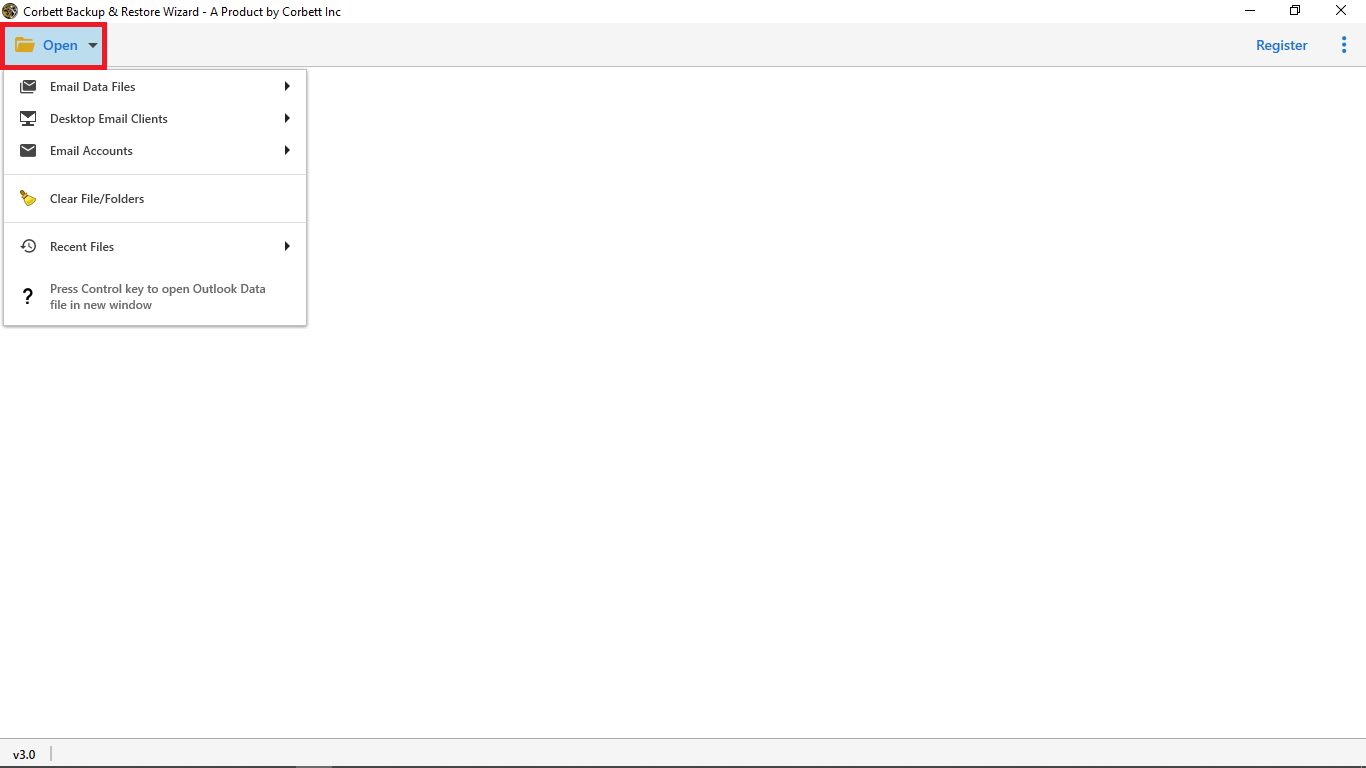
- Install and launch the utility on your Windows computer, then click Open in the tool window.

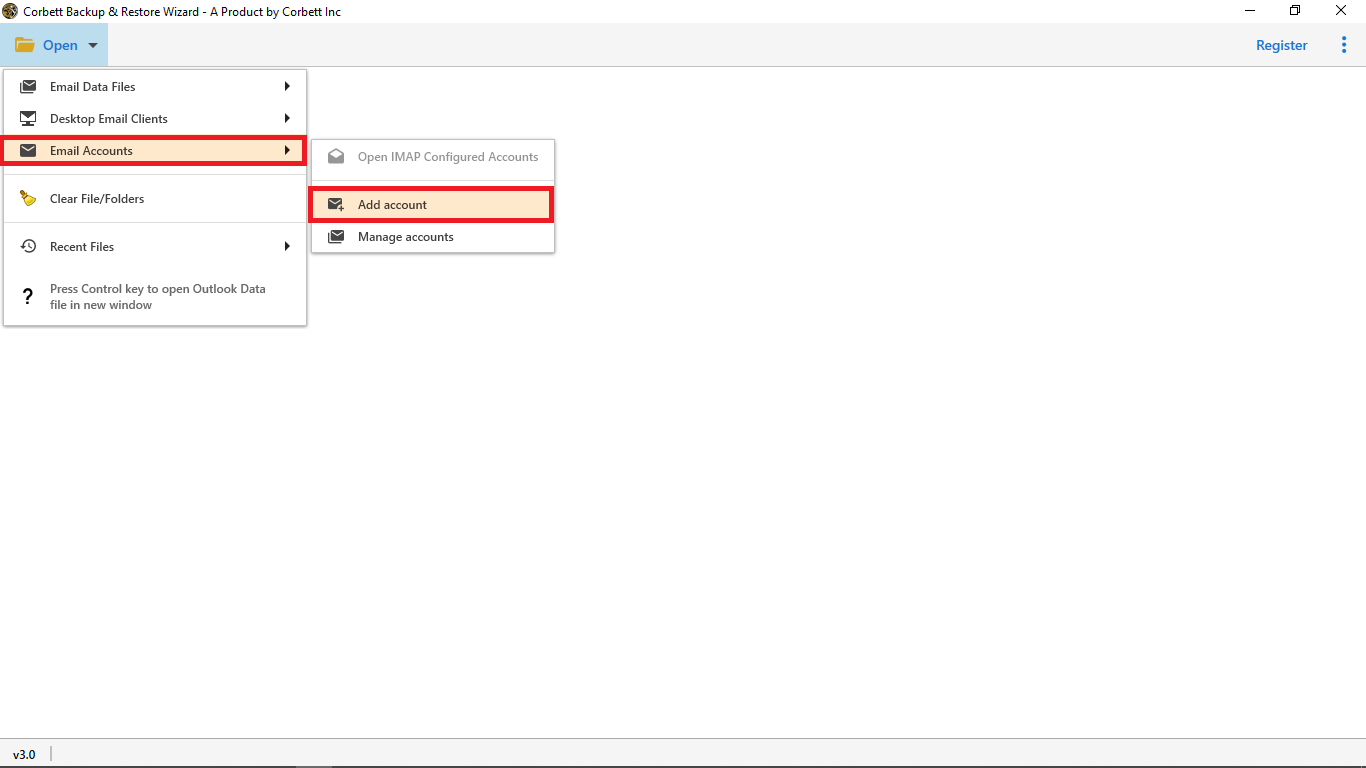
- Select Email Account, then Add Account to enter your SeaMonkey sign in details.
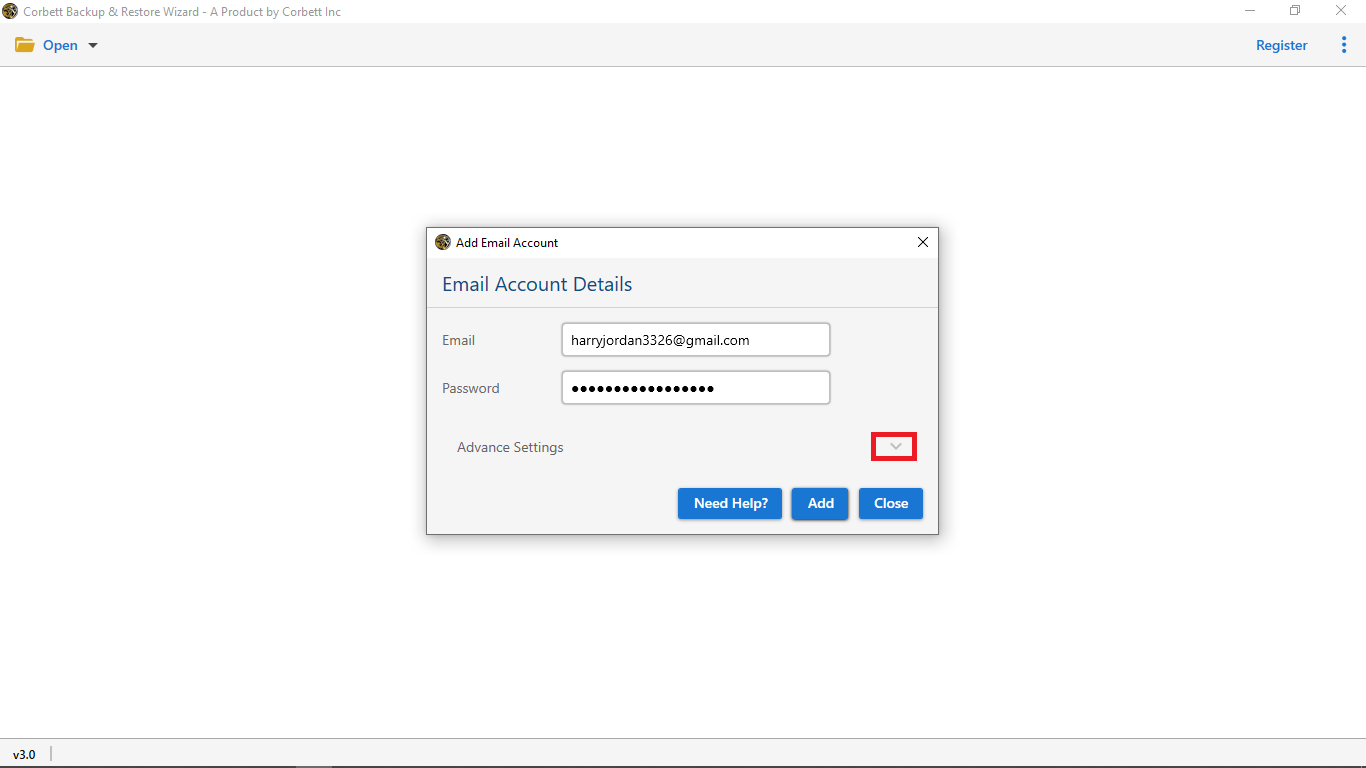
- Configure the account using your details and the Advanced Settings if needed.
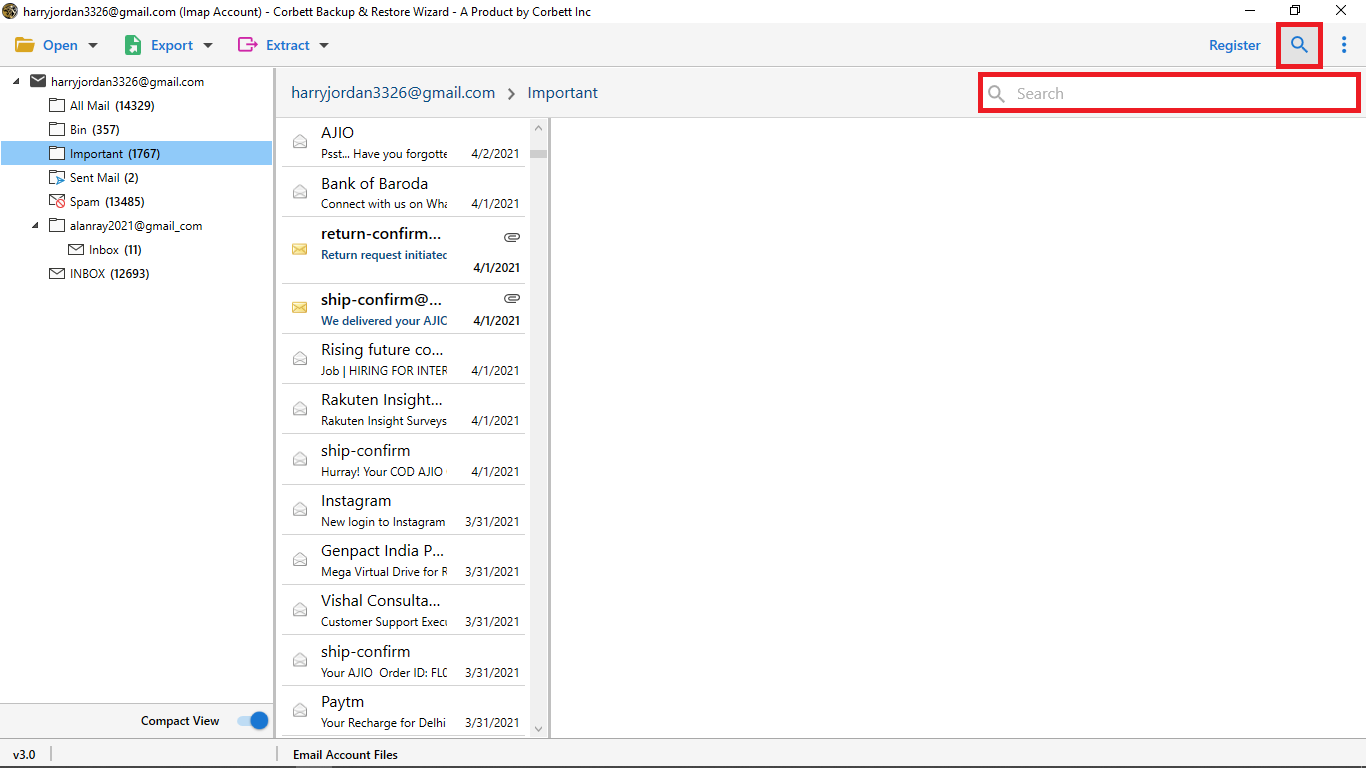
- Browse your mail in the tool and use search to find the messages you want.
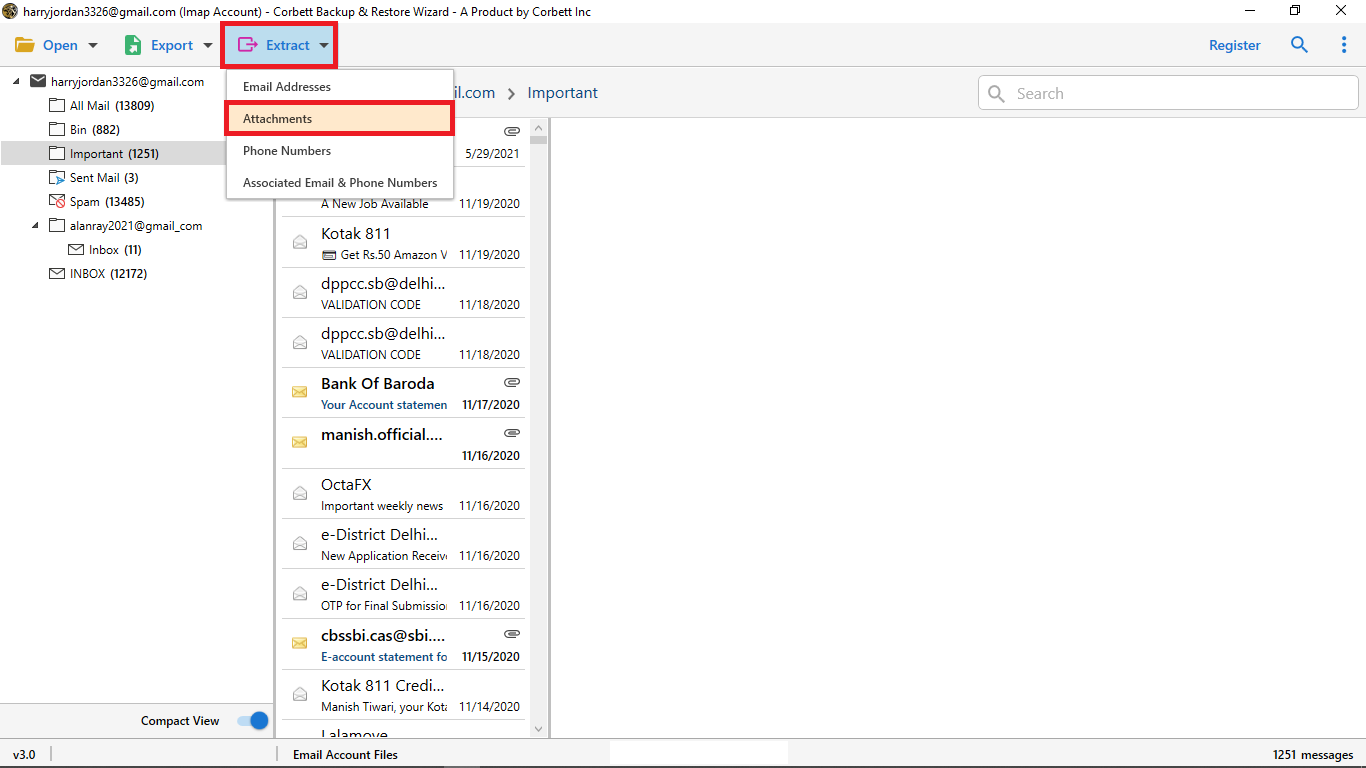
- Choose Extract in the top menu and pick Attachments from the dropdown.
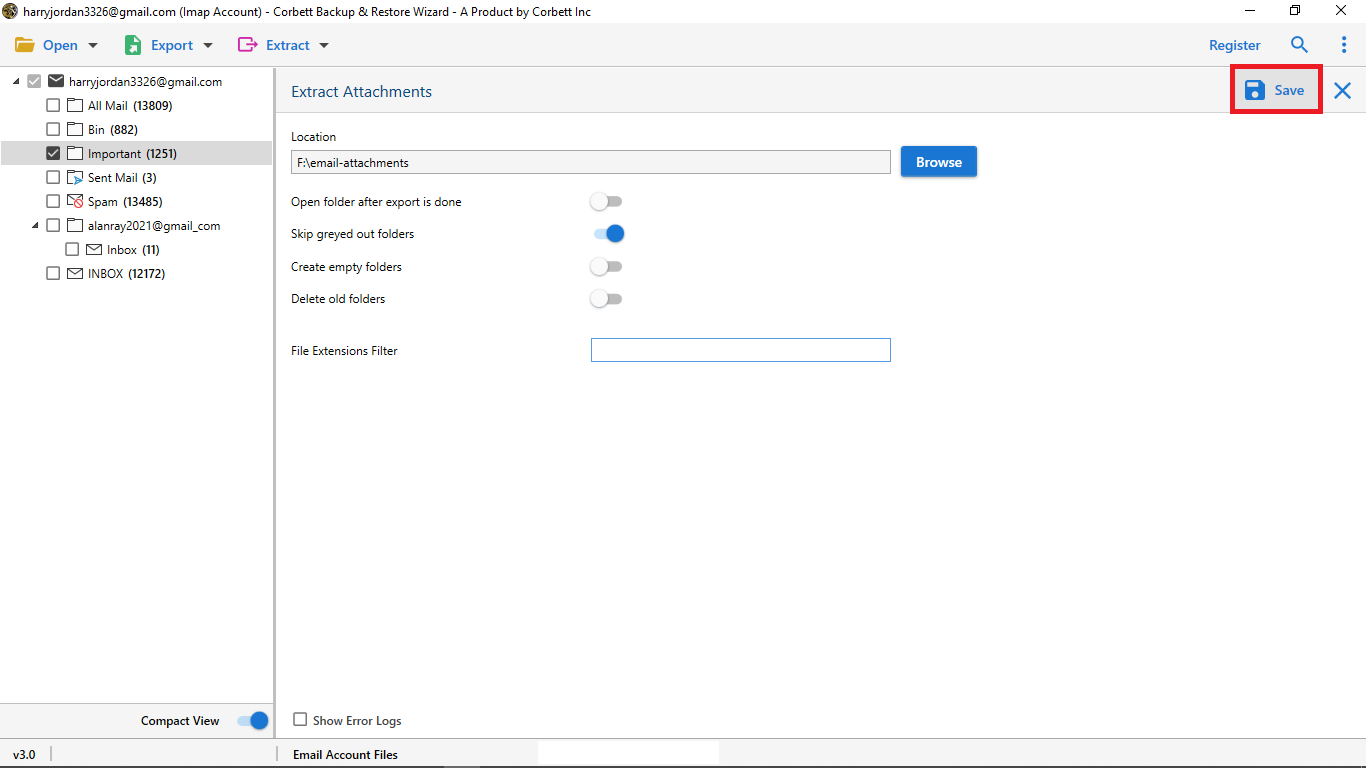
- Set any filters, pick a save location, and click Save to run the extraction.
Advantages of the Expert Utility
- File type filter: Extract only the extensions you need, such as PDF or DOC.
- Choose location: Save extracted files to any folder you pick, with no fixed default.
- Auto open folder: Open the results folder automatically once extraction finishes.
- Batch across accounts: Process many folders or accounts in one run instead of one email at a time.
Read More:
Built In vs Add On vs Tool
| Factor | Built in Save All | ImportExportTools NG | Dedicated tool |
|---|---|---|---|
| Cost | Free | Free | Paid |
| Scope | One email at a time | Folder at a time | Many folders or accounts |
| Filter by file type | No | Limited | Yes |
| Setup needed | None | Install add on | Install tool |
| Best for | A few messages | One busy folder | Large or filtered jobs |
Frequently Asked Questions
Q1. Does SeaMonkey have a built in way to save attachments?
Yes. Open a message, use the attachment dropdown, and choose Save All to write every attachment from that email to a folder.
Q2. How do I save attachments from many emails at once?
Use the free ImportExportTools NG add on to export a whole folder, or a dedicated extractor for many folders or accounts.
Q3. What is the difference between Save All and Detach All?
Save All copies the files out and leaves the email untouched. Detach All saves the files and then removes them from the message to free space.
Q4. Will detaching delete my attachments?
No. SeaMonkey saves the files first, then replaces each one in the email with a link, so nothing is lost.
Q5. Can I extract only certain file types like PDF?
The built in options export everything in a message. To filter by extension such as PDF only, use a dedicated tool.
Q6. Does this work with the SeaMonkey suite and not just standalone mail?
Yes. Mail is part of the SeaMonkey suite, so the same attachment options apply.
Final Thoughts
Extracting attachments from SeaMonkey does not have to mean buying software. For a few messages, the built in Save All and Detach All do the job for free, and Detach All is the quickest way to reclaim space. For a whole folder, the free ImportExportTools NG add on scales up. A dedicated tool is worth it only when you need filtering or to process many accounts at once. So which fits you: a quick free save on a few emails, or bulk extraction across the whole mailbox?