
Quick Answer
Export Office 365 distribution list to CSV in 3 ways.
Use Exchange admin center, PowerShell or software.
Exchange admin center has no member export button.
PowerShell gives a real CSV of list members.
Use Connect-ExchangeOnline and Get-DistributionGroupMember.
Software saves mailbox contacts, not list members.
You need every address inside a distribution list and Microsoft 365 gives you a screen to view, not a file to store. Many guides still show Remote PowerShell with Basic authentication, which Microsoft has retired. Below are three ways to get list members into a CSV file, with commands that use modern sign-in.
What do you need to get list members into a CSV file?
You need an admin role that can view recipients, Windows PowerShell and Exchange Online PowerShell module. Exchange Administrator role includes it. Without admin rights, ask your IT team to execute commands for you.
- Sign in to Microsoft 365 admin center with an account that holds Exchange Administrator role.
- Open Windows PowerShell as administrator on your PC.
- Install Exchange Online module with
Install-Module -Name ExchangeOnlineManagementand accept prompts. - Create a folder for your CSV file with
New-Item -ItemType Directory -Path C:\Reports -Force.
Microsoft documents how to Connect to Exchange Online PowerShell with modern authentication, including multifactor sign-in. Copy your list names or email addresses first. Every command below takes one of them.
Can Exchange admin center export Office 365 distribution list members?
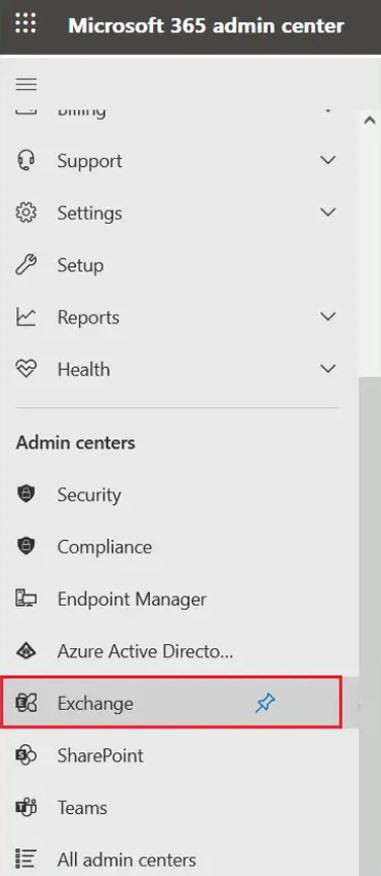
No. Exchange admin center shows members of a distribution list but its Export option saves a list of groups, not people inside one. Use it to check names, then switch to PowerShell for a file.
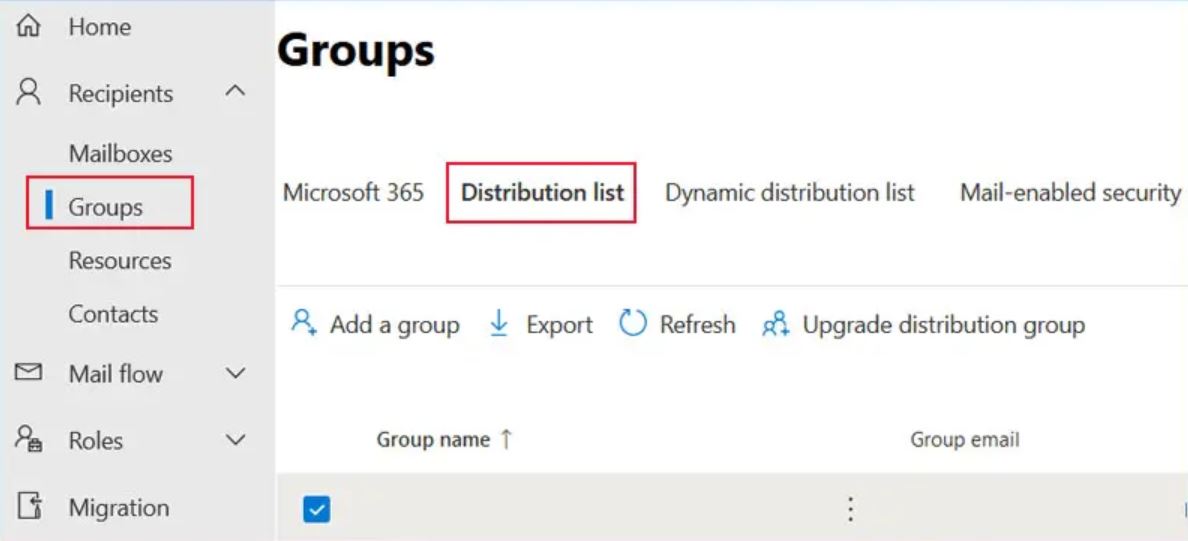
- Open Exchange admin center and select Recipients, then Groups.
- Select Distribution list tab and click your list.
- Open Members pane to view every address.
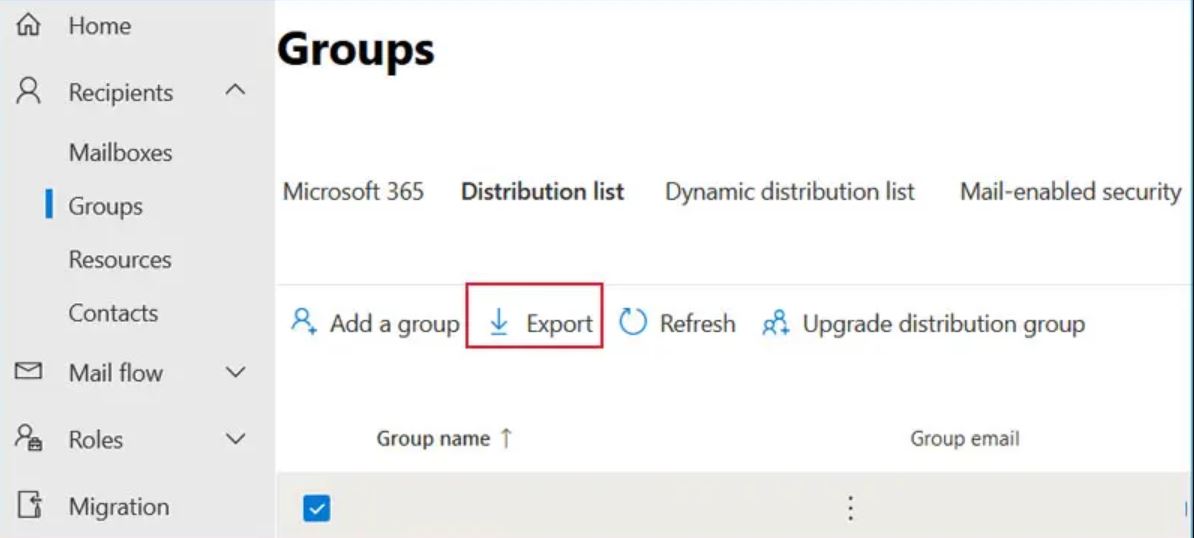
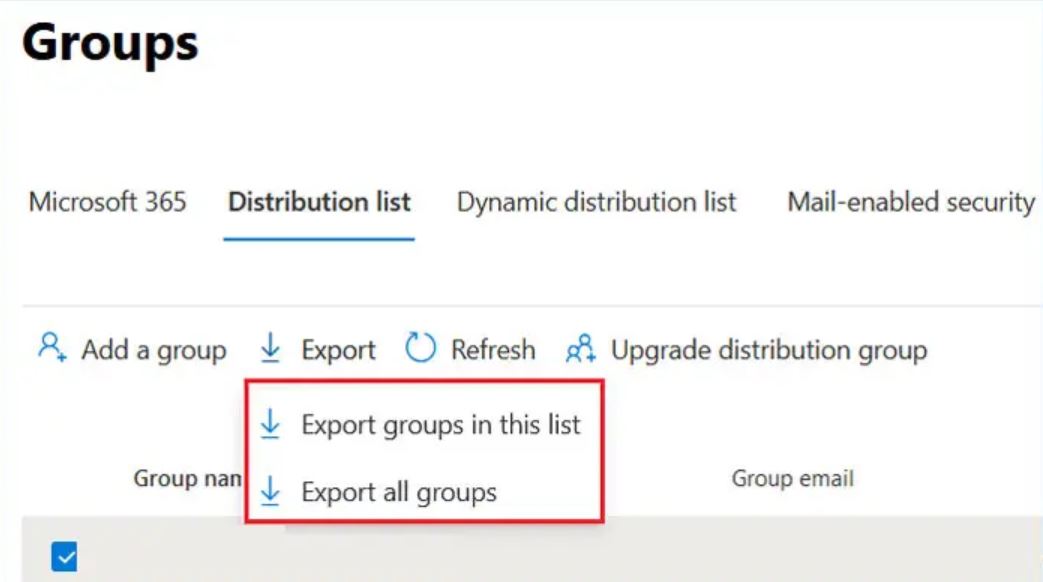
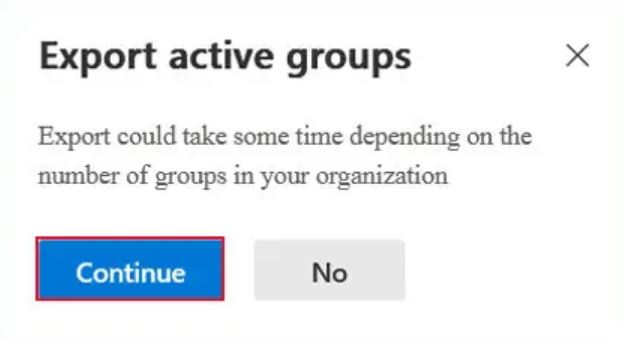
A user on Microsoft Q&A reported that Export data to CSV produced group names, not members of selected group. Their answer used PowerShell with Basic authentication, which is now retired so use steps in next section.
How to get list members into a CSV file with PowerShell?
Connect with Connect-ExchangeOnline, view members with Get-DistributionGroupMember and save output with Export-Csv. It costs nothing and gives you name, email address and recipient type.
- Open Windows PowerShell and execute
Connect-ExchangeOnline. Sign in with your admin account in Microsoft's window. - Execute the command below. Replace
sales@yourdomain.comwith your distribution list address. - Open
C:\Reports\DLMembers.csvin Excel and check rows. - Execute
Disconnect-ExchangeOnline -Confirm:$falseto close your session.
Get-DistributionGroupMember -Identity "sales@yourdomain.com" -ResultSize Unlimited | Select-Object DisplayName, PrimarySmtpAddress, RecipientType | Export-Csv -Path "C:\Reports\DLMembers.csv" -NoTypeInformation -Encoding UTF8Admin forums agree that Exchange admin center cannot export members and they point to that same cmdlet pair. See Microsoft's page on Get-DistributionGroupMember for every parameter.
Old guides open a session with New-PSSession and Basic authentication, then import MSOnline or AzureAD modules. That route is deprecated. Connect-ExchangeOnline replaces it and cmdlets after sign-in remain almost identical.
How to export members of all Office 365 distribution lists to CSV?
To export members of all Office 365 distribution lists, loop through every list with Get-DistributionGroup and add a Group column so one CSV file shows who sits in which list.
- Execute
Connect-ExchangeOnlineif your session closed. - Paste command below into PowerShell and press Enter.
- Open
C:\Reports\AllDLMembers.csvand filter by Group column.
Get-DistributionGroup -ResultSize Unlimited | ForEach-Object { $g = $_; Get-DistributionGroupMember -Identity $g.PrimarySmtpAddress -ResultSize Unlimited | Select-Object @{n="Group";e={$g.DisplayName}}, DisplayName, PrimarySmtpAddress, RecipientType } | Export-Csv -Path "C:\Reports\AllDLMembers.csv" -NoTypeInformation -Encoding UTF8Large tenants take time because command reads every Office 365 distribution list one at a time. Paste commands above exactly and check straight quotes if your editor swaps them for curly ones.
How to export nested Office 365 distribution list members?
Get-DistributionGroupMember returns direct members only. If a list contains another list, your CSV shows that inner list as one row with its recipient type, not its people.
To flatten nested lists, execute same command on every inner list you find in RecipientType column or use a recursive script. A moderator shared one recursive function in a Microsoft Q&A thread on nested list export. That thread has no accepted answer and its code has no loop protection so test on a small list first.
Can software get list members into a CSV file?
Distribution list membership lives in Exchange Online so PowerShell is correct tool for it. Corbett Office 365 Backup Tool includes your mailbox side. It signs in on Microsoft's own page with multifactor support and saves a mailbox to disk as PST, MBOX, EML, MSG, PDF, HTML, CSV, TXT, vCard and ICS. Contacts go to vCard and calendar goes to ICS. It works on Windows 11 down to Windows 7 and on Windows Server 2008 to 2025. Product page does not list distribution lists or groups so test a free demo on your mailbox first to see what appears in your output folder. Online Archive, shared mailboxes, public folders, OneDrive, SharePoint and Teams chats are not included.
Steps to save mailbox contacts and mail to CSV with software
- Install Corbett Office 365 Backup Tool on a Windows PC and open it.
- Add your Microsoft 365 account and sign in on Microsoft's page. No app password is needed.
- Tick Contacts, Inbox or any other mailbox folders you want.
- Choose an output format like CSV for mail or vCard for contacts.
- Select a destination folder and start backup.
- Open your output folder and check files before you buy.
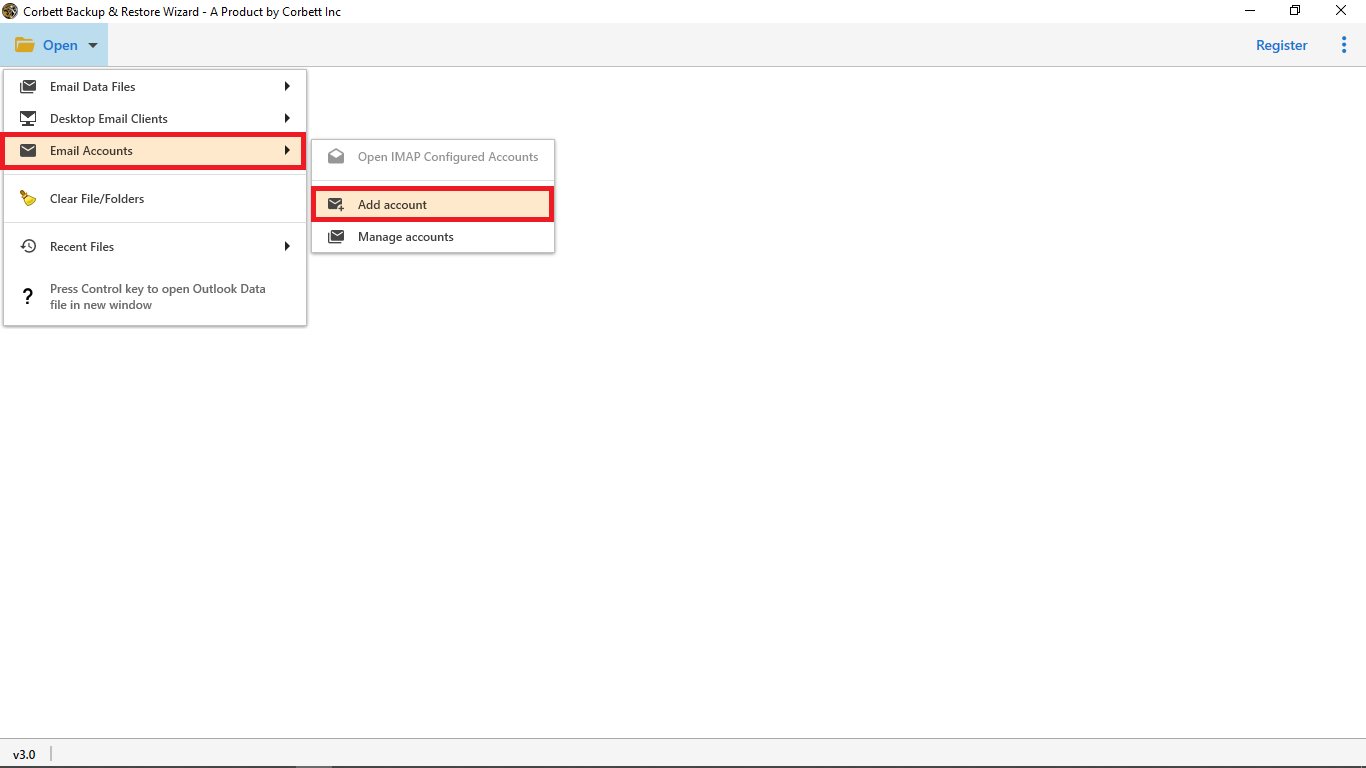
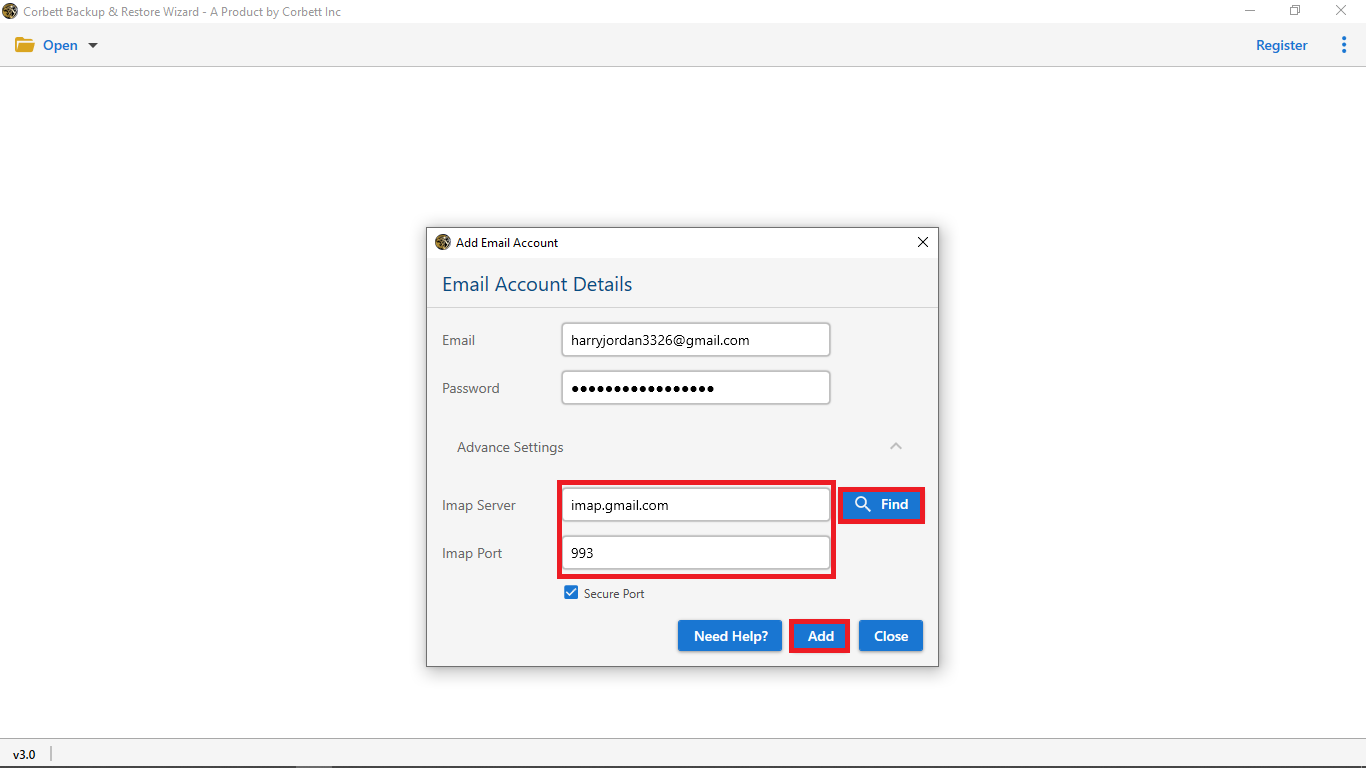
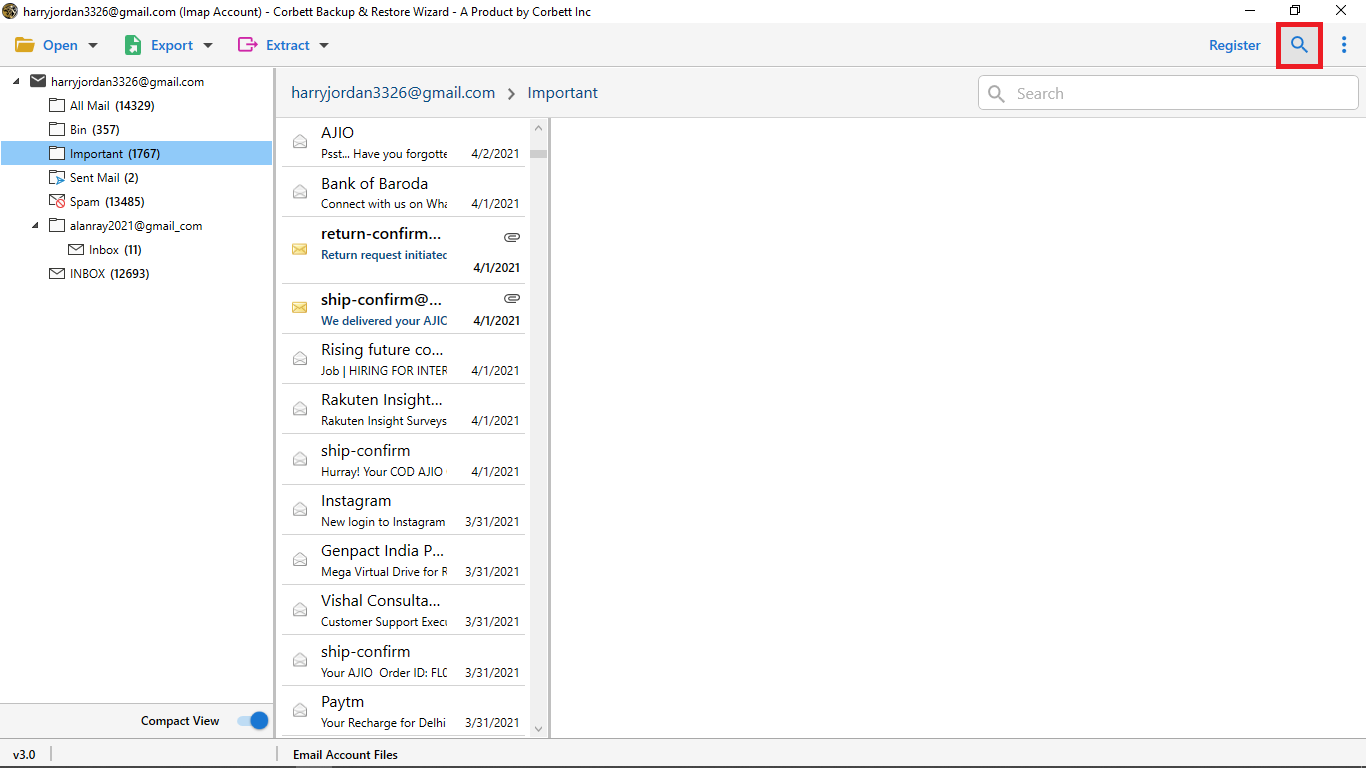
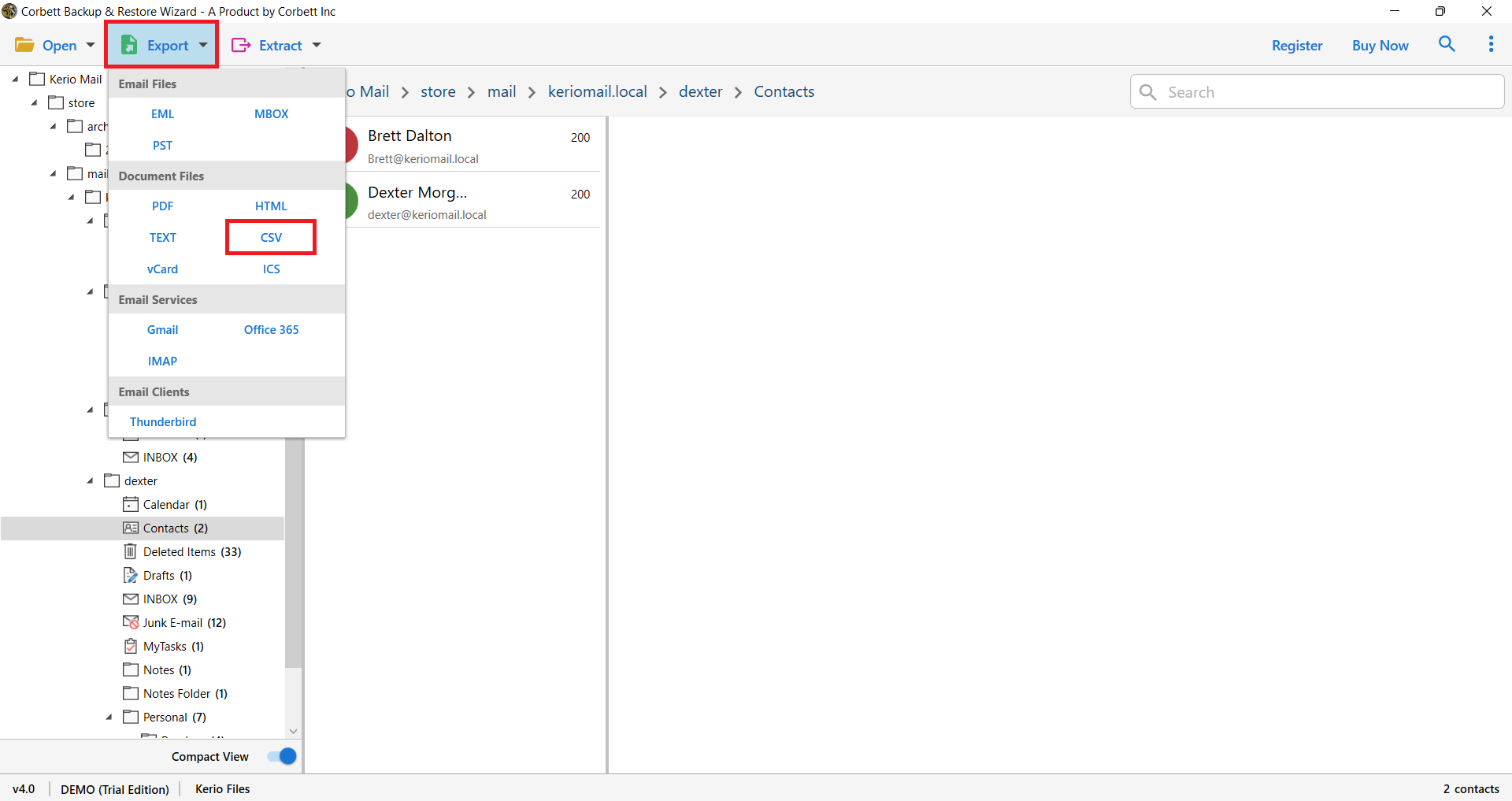
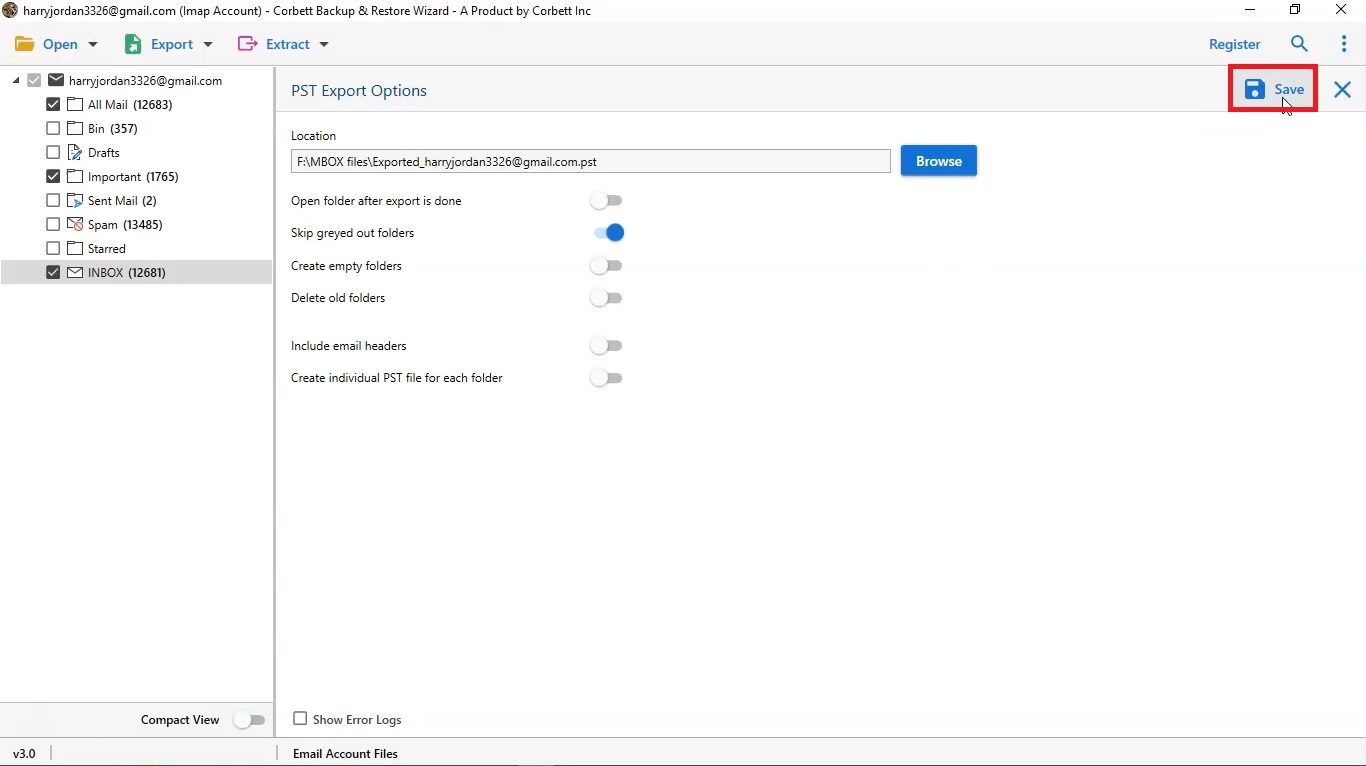
Software suits you when you want a local copy of people you email, not Office 365 distribution list members. Need to move mailboxes instead? See how to Migrate Outlook emails to Office 365 or Move Office 365 email to Gmail.
Which way to get a list into a CSV file is best?
Use PowerShell to get list members into a CSV file. Use Exchange admin center only to look at members. Use software when you want mailbox contacts and mail on disk.
| Way | Needs | CSV of list members | Best for |
|---|---|---|---|
| Exchange admin center | Admin role, browser | No, view only | Checking members by eye |
| Exchange Online PowerShell | Exchange Administrator, ExchangeOnlineManagement module | Yes | One list or all lists |
| Corbett Office 365 Backup Tool | Windows PC, Microsoft 365 sign-in | Not listed on product page | Mailbox contacts and mail backup |
Need addresses from mail instead of lists? See how to Extract email addresses from Outlook.
Why does Office 365 distribution list export fail?
Connect-ExchangeOnline is not recognized
Install ExchangeOnlineManagement module first, then restart PowerShell. Start PowerShell as administrator during install.
Old Basic authentication script stops with an error
Remote PowerShell with Basic authentication is deprecated. Replace New-PSSession lines with Connect-ExchangeOnline and retain your Get-DistributionGroupMember line.
CSV has group names, not members
That output comes from Exchange admin center Export option. Execute Get-DistributionGroupMember in PowerShell for people inside an Office 365 distribution list.
You do not have permission to execute command
Your account needs an Exchange role that views recipients. Ask a global admin to add Exchange Administrator role or to execute it for you.
Get list members into a CSV file shows only some people
Add -ResultSize Unlimited so large lists return every row and check RecipientType column for inner lists that need their own export.
What to do after you get list members into a CSV file?
Open your CSV in Excel, check row count against Members pane and remove test rows. Store it in a protected folder, because it holds real email addresses. Save a local copy of your mailbox with Office 365 Backup Tool, since cloud mail depends on your subscription.
Our view
Use PowerShell for list members, because only PowerShell gives a real CSV. Test your single list command first and compare row count with Members pane before you loop through every list. Treat that CSV as sensitive, since it holds real addresses.
Key takeaways
- Exchange admin center views members but cannot get list members into a CSV file.
- Use
Connect-ExchangeOnline, not Basic authentication, thenGet-DistributionGroupMemberandExport-Csv. - Loop with
Get-DistributionGroupto export every list in one CSV. - Nested lists need their own export or a tested recursive script.
- Corbett Office 365 Backup Tool saves mailbox contacts and mail, not list membership.
Questions about Office 365 distribution list members
Can Exchange admin center export distribution list members?
No. It shows members in a pane and its Export option saves group names only.
Does Basic authentication still work for Exchange Online PowerShell?
No. Remote PowerShell with Basic authentication is deprecated. Use Connect-ExchangeOnline from ExchangeOnlineManagement module.
Which admin role do I need?
Exchange Administrator role can view recipients and members. Ask a global admin if you lack it.
Does export include members of nested lists?
No. Get-DistributionGroupMember returns direct members so an inner list shows as one row.
How do I get list members into a CSV file?
Execute Connect-ExchangeOnline, then Get-DistributionGroupMember for your list and pipe results to Export-Csv. Exchange admin center has no member export.
Why does my CSV show group names instead of people?
You used Export option in Exchange admin center, which saves groups. Use PowerShell for members.
How do I export all distribution lists with their members?
Loop Get-DistributionGroup into Get-DistributionGroupMember and add a Group column. Full command sits in our all lists section.
