Quick answer
- Free copy: sign in to your new account and use Gmail's Import mail and contacts. Labels and folders do not come across.
- One inbox: add forwarding and a Send mail as address, so two accounts act like one.
- Labels kept: Corbett Gmail Migration Tool copies every label into another Gmail account with filters and a free demo.
You want to clone a Gmail account so your mail lives in a second address. You may be retiring an old account, want a safety copy or want two accounts in one inbox. Gmail has no merge button, so there is no single click to clone a Gmail account. Below are three ways to clone a Gmail account, what every method keeps and fixes for errors that stop an import.
What does it mean to clone a Gmail account?
Clones are copies. When you clone a Gmail account, mail moves from account A to account B and account A stays as it was. Google has no button that fuses two accounts. What people mean by merge is reading and sending from one inbox, and Gmail's free settings do that.
Mail is only part of a Google account. Contacts export from Google Contacts as a CSV or vCard file. Drive files, Calendar events and Photos move on their own. If you also need a file copy of mail, see how to import MBOX to Gmail and how to extract email addresses from Gmail.
How to clone a Gmail account with Gmail's free import?
Gmail's importer is a simple free way to clone a Gmail account. It copies old mail and contacts from another account into your signed in account. Use a computer, because it lives in Gmail on web.
- Sign in to your new account, because you clone a Gmail account from destination side.
- Select your gear icon, then See all settings.
- Open your Accounts and import tab.
- Select Import mail and contacts.
- Enter your old Gmail address and follow on-screen sign in prompts.
- Choose contacts, old mail and new mail, then select Start import.
Google's help page says Gmail forwards new mail from your old address for 30 days after import. A large mailbox arrives slowly, so start early and let it run. Menu names come from Google's own help page, so confirm them in your account.
Google also says you can import messages but not folders or labels. That is a big gap if you must clone a Gmail account with filing intact. Gmail cannot import a message of 150 MB or more, and your source account needs POP turned on when it is a Gmail address.
One change to know: Google's page says "Check mail from other accounts" stops taking new users after Q1 2026 and works for existing users until January 2027. Guides built on that feature are out of date. Import mail and contacts is a one-time import, and Google says it stays in Gmail on web.
How to clone a Gmail account into one inbox?
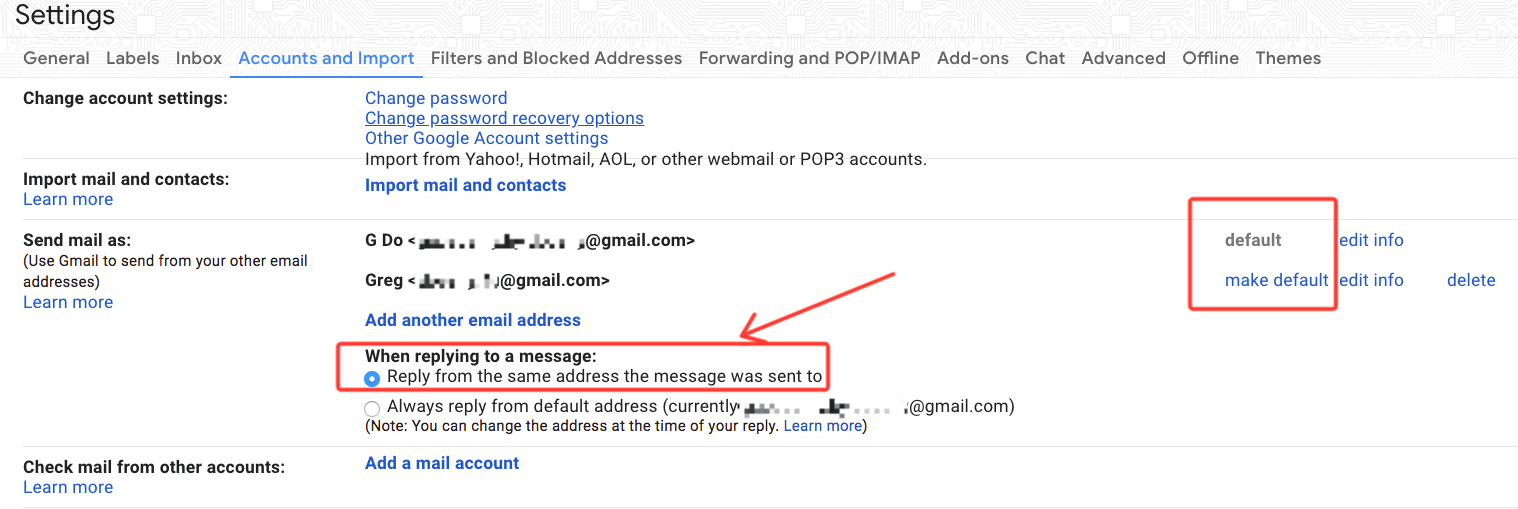
If your goal is to merge, two more free settings finish that job. Forwarding brings future mail in. Send mail as adds your old address as an alias, so you reply from either address.
- Sign in to your old account, open See all settings and go to Forwarding and POP/IMAP.
- Select Add a forwarding address, enter your main Gmail address and confirm Gmail's message.
- Choose to forward a copy of incoming mail to your main address and save.
- In your main account open Accounts and import, find Send mail as and select Add another email address.
- Verify your old address, then choose to reply from whichever address got that message.
With import plus those settings, two accounts act as one. History is copied, new mail lands in one place and replies leave from your right address. Want only to see both inboxes? Google's account switcher does that without moving data. Moving mail between more accounts? See how to migrate Gmail emails to another Gmail account.
How to clone a Gmail account with software?
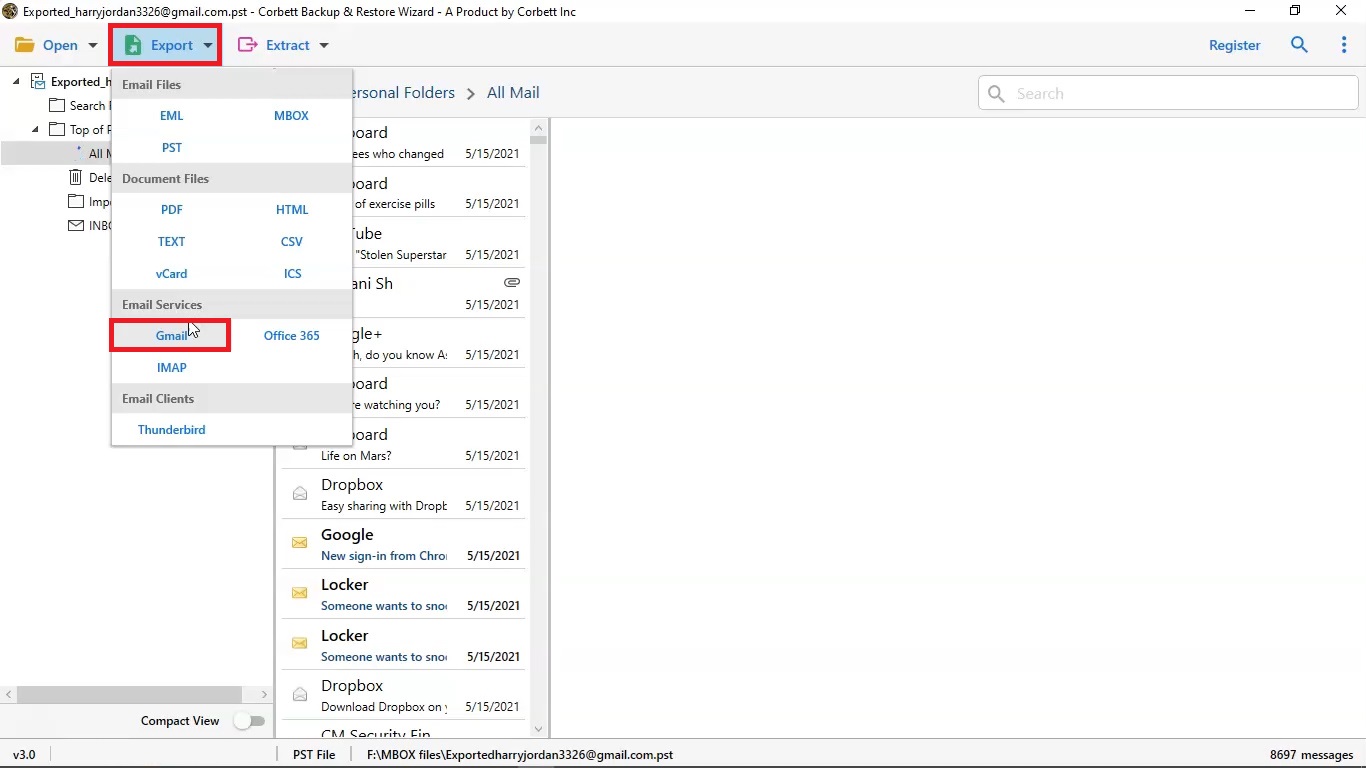
Use Corbett Gmail Migration Tool to clone a Gmail account with labels intact. Its page says it moves a Gmail account into another Gmail address, Google Workspace, Microsoft 365, Outlook.com, Yahoo or any IMAP server, with labels, attachments and dates kept. Read or unread status stays and your source is left untouched. It can also save your mailbox as PST or PDF on its way. It is Windows software, and mail flows through your PC, so Corbett never holds a copy. Free demo saves 10 emails per folder.
Steps to clone a Gmail account with software
- Turn on 2-Step Verification in your old Google account, open App passwords and create a 16 character code.
- Install Corbett Gmail Migration Tool on your Windows PC and run it as administrator.
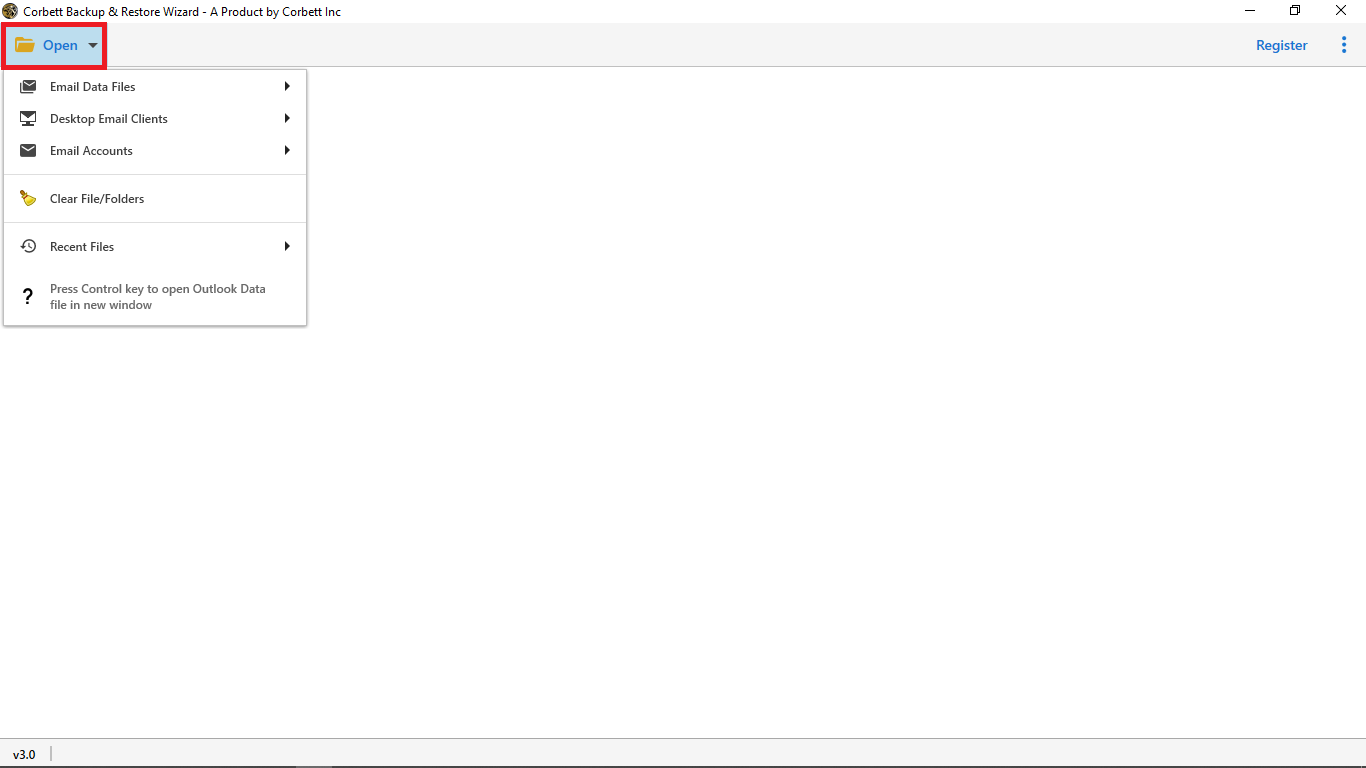
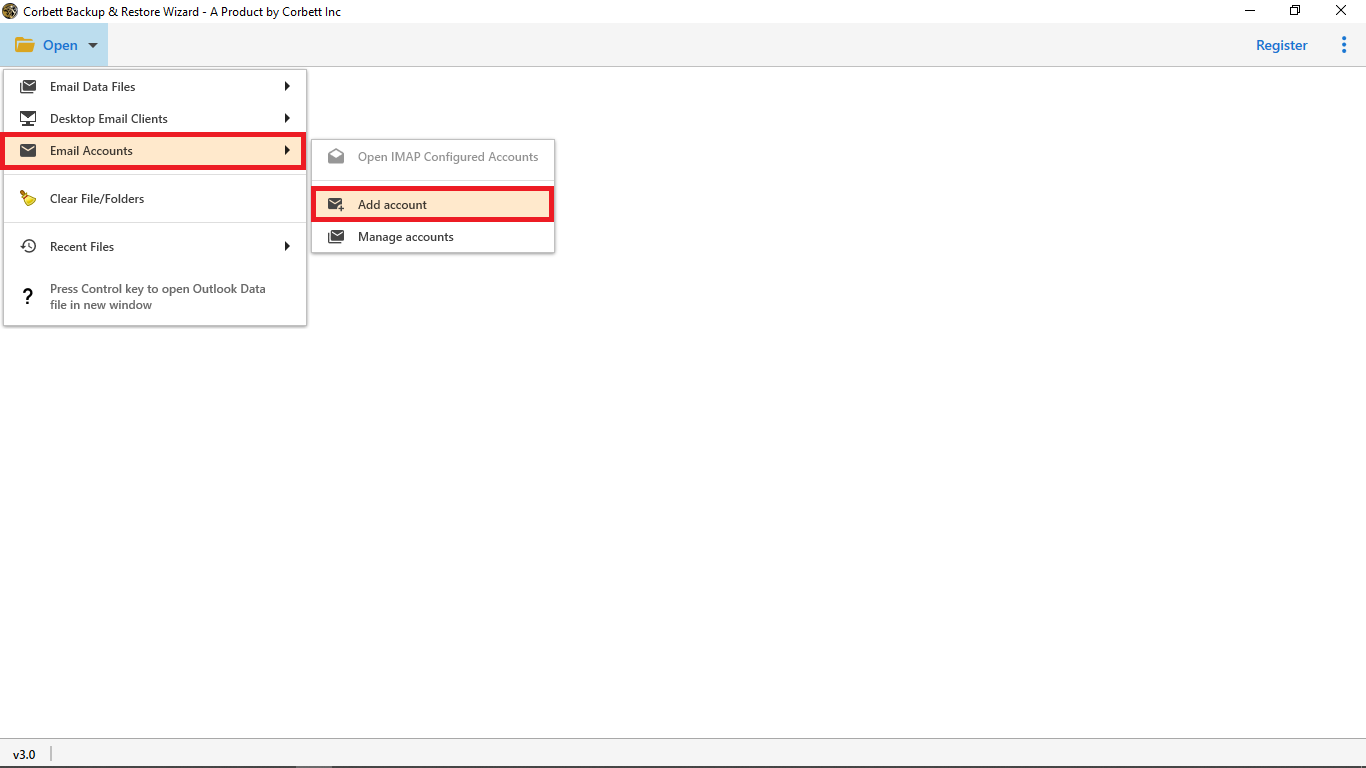
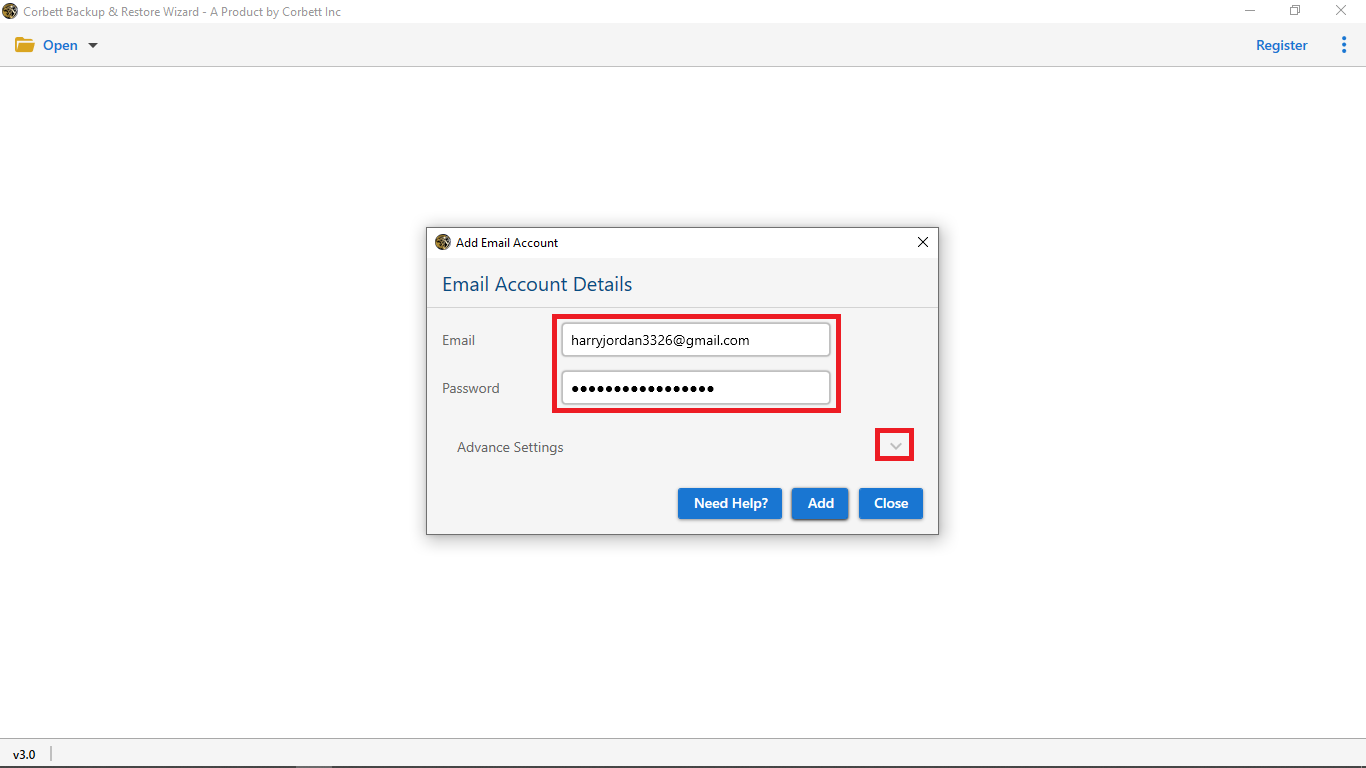
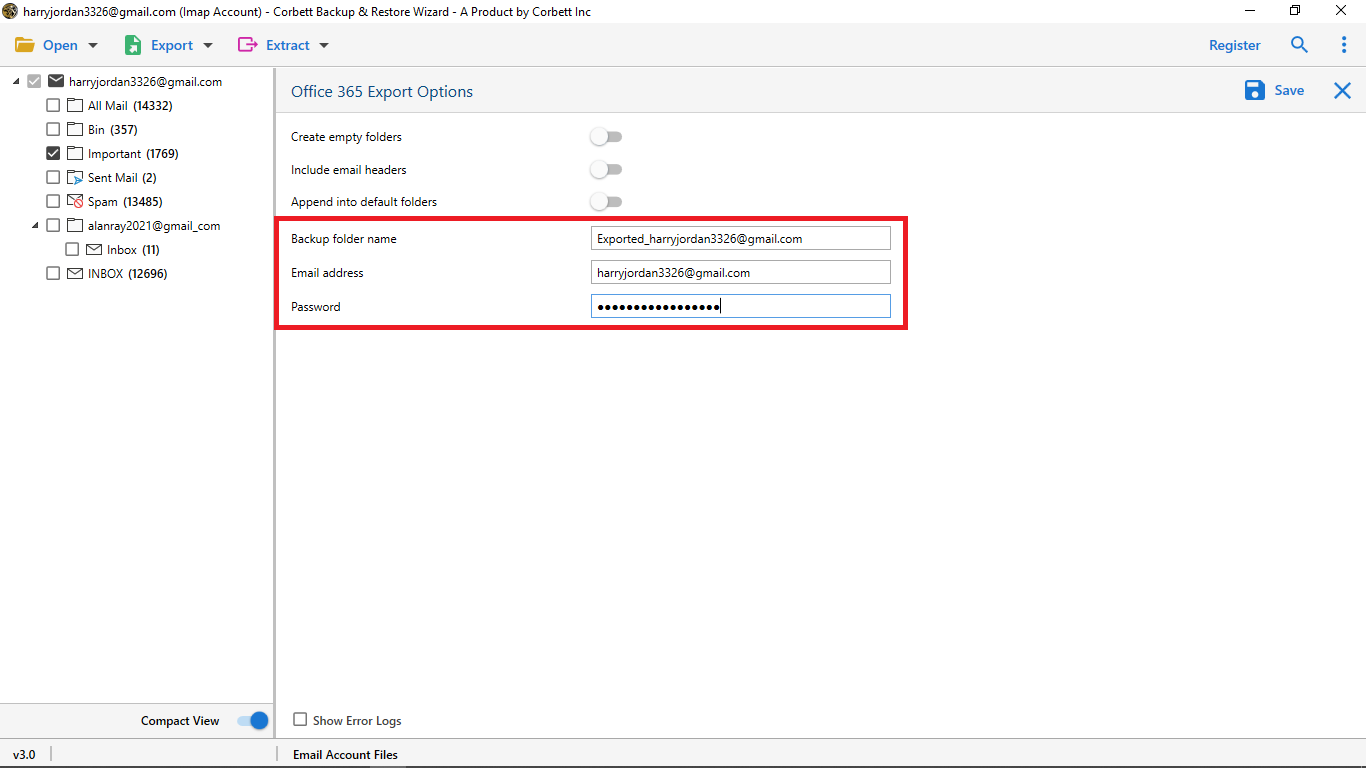
- Add your old Gmail address and app password as source, then add your new address as destination.
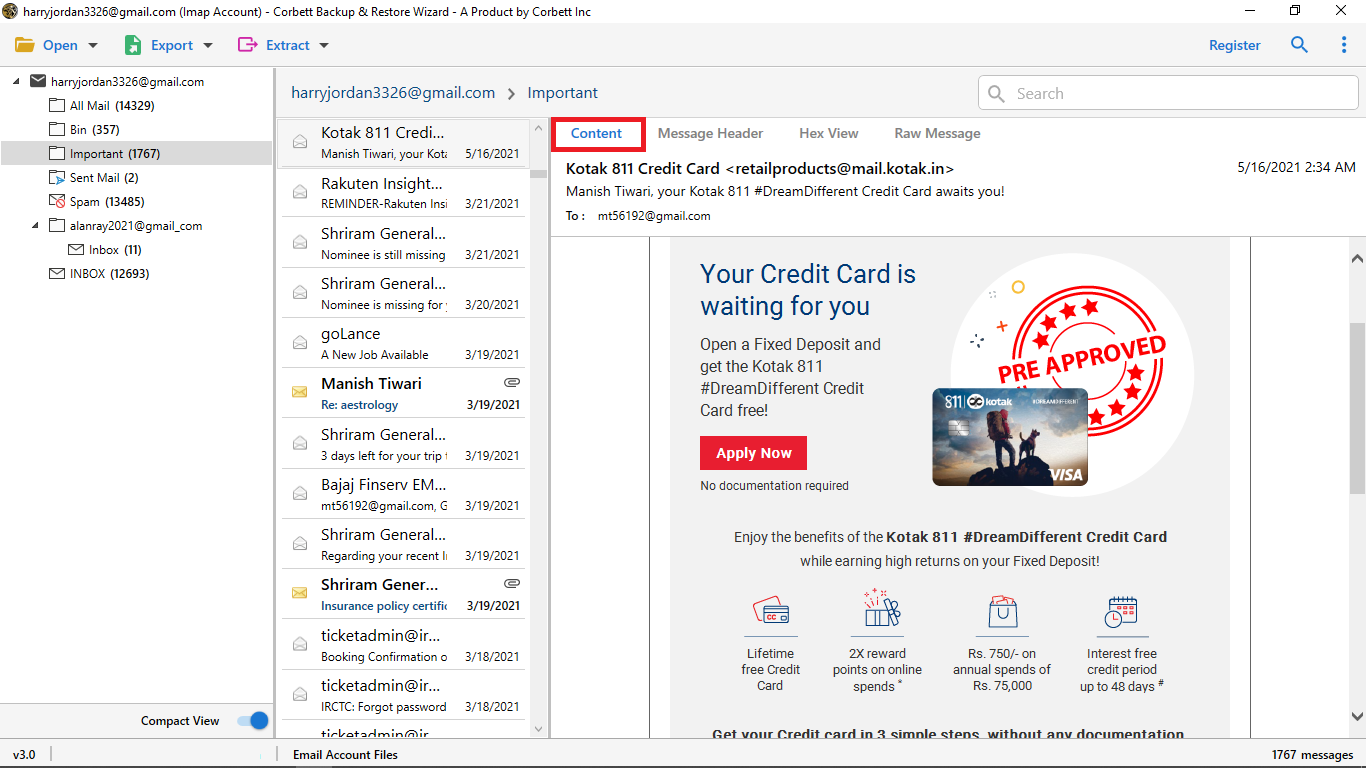
- Tick Gmail labels you want to clone a Gmail account with. Untick Spam, Trash and All Mail, so nothing arrives twice.
- Preview a few messages, then add date, sender, subject, attachment or size filters if you want less mail.
- Start a run to clone a Gmail account. An interrupted transfer carries on where it stopped.
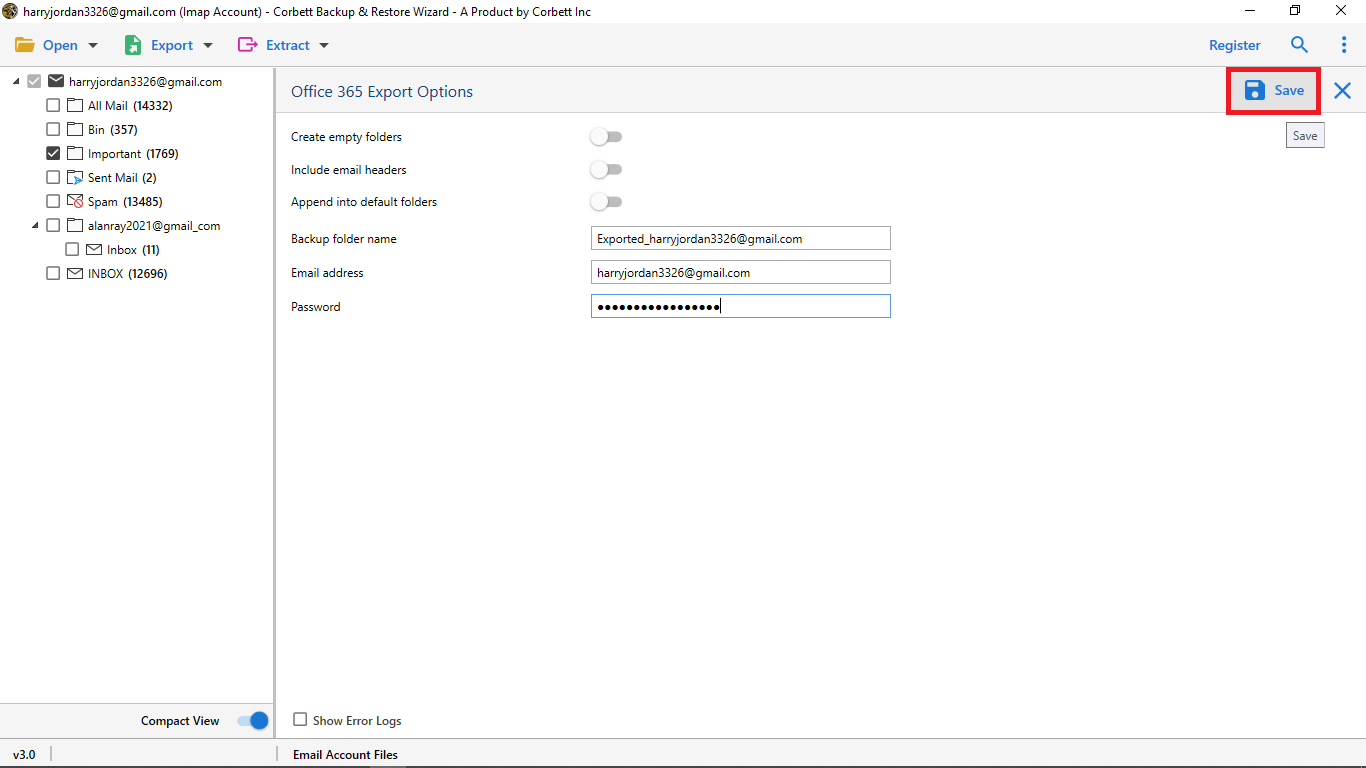
Many accounts? Corbett's page says a batch file handles many Gmail to Workspace moves. Duplicates stay out of your target. Filters, forwarding, signature settings and calendar events stay behind, so set those up again by hand. Licence is lifetime from $99 with a 30-day money-back window. To keep a file copy first, use Corbett Gmail Backup Tool. Moving a work account? See how to convert Google Workspace to a personal account.
What do you need before you clone a Gmail account?
Check these items first, because most stalled imports trace back to one of them.
- Enough free space before you clone a Gmail account. A copy doubles your data and free Gmail space is shared across Mail, Drive and Photos.
- POP turned on in your old Gmail account when you use Google's importer.
- A 16 character app password for your old account when you use software.
- IMAP is always on for personal Gmail. Corbett's page says Google removed that switch in January 2025, so there is nothing to enable. See enable IMAP in Gmail not showing.
A work or school address runs on Google Workspace, where admins move mail with Google's data migration tool and may block app passwords. That case needs an admin. Using an IMAP host in place of Gmail? See how to migrate IMAP to Gmail.
Which way to clone a Gmail account is best?
To clone a Gmail account and keep labels, use software. For a flat copy or one combined inbox, Gmail's free settings are enough.
| Way to clone a Gmail account | Keeps labels | Filters | Other destinations | Cost |
|---|---|---|---|---|
| Gmail free import to clone a Gmail account | No | No | Gmail only | Free |
| Forwarding and Send mail as to clone a Gmail account into one inbox | No | Per forwarding filter | Gmail only | Free |
| Corbett Gmail Migration Tool to clone a Gmail account | Yes | Date, sender, subject, attachment, size | Workspace, Microsoft 365, Yahoo, IMAP, PST | Free demo, then from $99 |
Why does clone a Gmail account fail?
Import is stuck when you clone a Gmail account
Google says to confirm your password and that your old account still works. Then delete and re-add that source address under Settings, Accounts and import. Retry later if you see timeouts.
Mail is missing after you clone a Gmail account
Search with in:anywhere plus your terms and expand threads, as Google advises. Messages of 150 MB or more never import when you clone a Gmail account. Search larger:10M to find big ones.
Labels are gone after you clone a Gmail account
That is how Gmail's importer works. Folders and labels are not imported, so use software if you must keep them.
Server denied access
Google says to allow access to your source account. For a Gmail source, turn on POP and check that sign in is allowed.
Software rejects your password
Google blocks normal passwords in outside apps when 2-Step Verification is on. Create an app password and sign in with that. No usable Google Help Community thread exists on that error, so fixes above come from Google's own import help page.
What to do after you clone a Gmail account?
After you clone a Gmail account, compare label and message counts on a few folders. Set a vacation responder on your old address that names your new one. Keep your old account for a few months, because bank logins and password resets may still point there. Delete a Google account only when nothing important routes through it, since deletion also removes Drive files and Photos. Our guide to protect Gmail account from hackers helps secure your new one.
Our view
Gmail's own importer is free and clones mail in one pass. It does not copy filters or settings, so software only helps for labels and offline copies. Check Google's page first, since POP fetching is ending.
Key takeaways
- Gmail has no merge button, so to clone a Gmail account you copy mail and combine inboxes with forwarding and Send mail as.
- Gmail's free importer copies messages but not folders or labels, and skips messages of 150 MB or more.
- Google's POP fetch feature stops for new users after early 2026, but one-time Import mail and contacts stays on web.
- Use an app password when software connects to Gmail with 2-Step Verification on.
- Corbett Gmail Migration Tool can clone a Gmail account with labels intact, and its free demo saves 10 emails per folder.
Questions about clone a Gmail account
How do I clone a Gmail account?
To clone a Gmail account, sign in to your new account and use Import mail and contacts, or use Corbett Gmail Migration Tool to copy every label.
Can I clone a Gmail account for free?
Yes. Gmail's Import mail and contacts copies mail and contacts at no cost, though labels and folders are not imported.
Can two Gmail accounts merge into one?
No. Google has no true merge. Use import, forwarding and Send mail as to read and reply from one inbox.
Does Gmail's import keep labels?
No. Google says you can import messages but not folders or labels. Software keeps them.
Is there a size limit when I clone a Gmail account?
Gmail cannot import messages of 150 MB or more, attachments included.
Does cloning delete anything from your old account?
No. Every way here to clone a Gmail account copies mail. Your old account keeps everything until you delete it.
Do I need an app password to clone a Gmail account with software?
Yes when 2-Step Verification is on. To clone a Gmail account with software, create a 16 character app password and sign in with it.
Can I clone a Gmail account to Outlook or Microsoft 365?
Yes with Corbett Gmail Migration Tool, which also lands mail in Microsoft 365, Outlook.com, Yahoo or any IMAP host. Gmail's free import only moves mail into Gmail.
Does Corbett Gmail Migration Tool run on Mac?
No. It is Windows software, so run it on a Windows PC.
What happens to contacts and calendar when I clone a Gmail account?
Gmail's importer can copy contacts. When you clone a Gmail account with software, calendar events and filters stay behind, so export or set them up by hand.
