Saved an old Hotmail account
I had a Hotmail address from twenty years back that I barely use. Wanted a copy before it got deleted for being idle. Signed in through the Microsoft window, picked PST and it saved the lot without a hitch.
Corbett
Corbett Outlook.com Backup Tool keeps a personal Microsoft mailbox, whether the address ends in outlook.com, hotmail.com, live.com or msn.com, to a Windows drive in eight formats from PST to PDF. Login happens on Microsoft's page, so passkeys and the Authenticator app work unchanged.
Download free demo Purchase now
Messages flow from outlook.live.com straight to the PC. No Corbett relay is involved.
Free demo, scanned clean on VirusTotal and a 30-day money-back window.
Lifetime licence from $99 Free trial saves 10 emails per folder
One address, four names
Two years without a sign-in and Microsoft closes a personal account, mail included. Corbett's Outlook.com backup tool keeps Focused, Other, Archive and every custom folder on a local drive first. Below is what transfers and what Microsoft keeps.
Comes across
Folders backed up
Saves as
Not included
A personal account, not a work or school account
Outlook.com Backup Tool covers free personal Microsoft accounts. Company or school addresses run on a Microsoft 365 tenant and belong with the Office 365 Backup Tool. An older @hotmail.com address has its own Hotmail Backup Tool page.
Core features
The run in five screens, from the Microsoft login to a finished backup file.
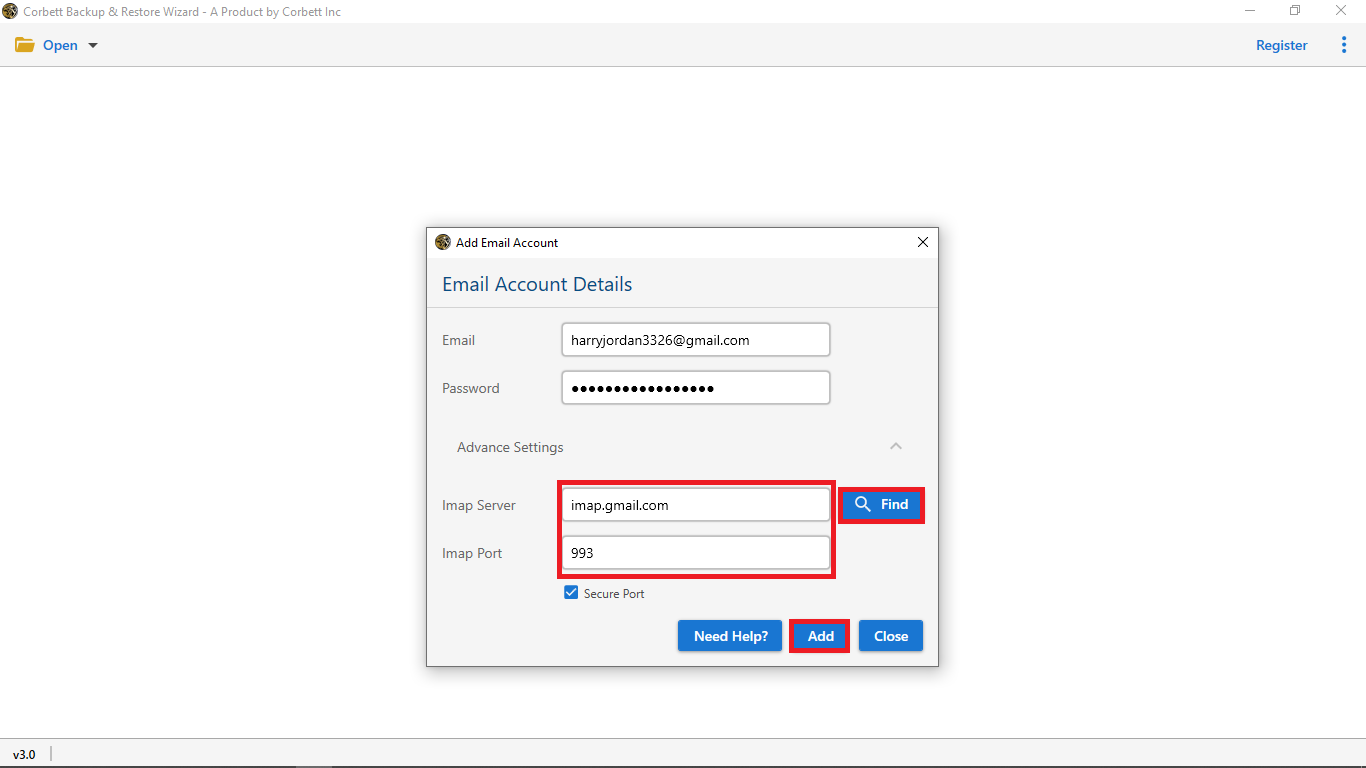
Connect
Choose Outlook.com and the server fields load by themselves. Microsoft's login window then asks for the address, password and any Authenticator prompt. Once approved, the folder list opens and the token is kept by Microsoft, not by the tool.
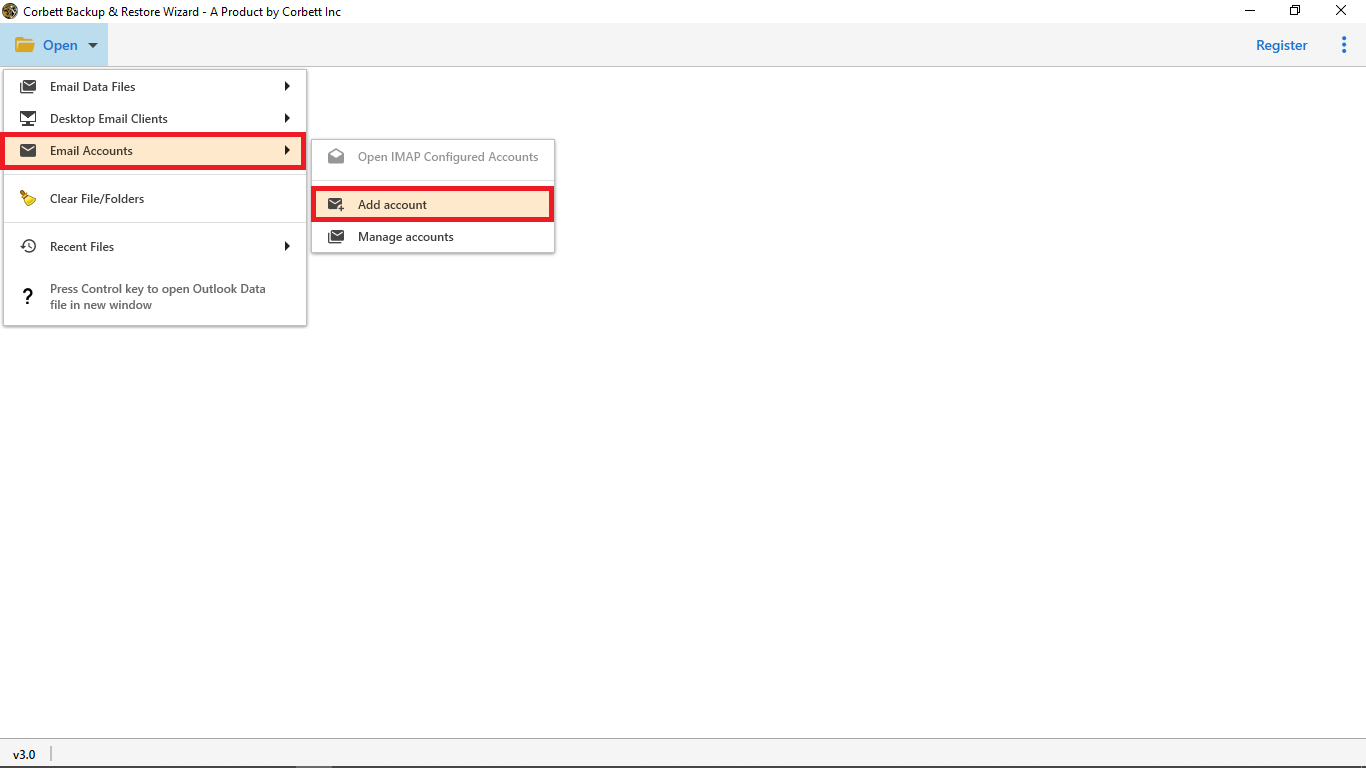
Folder selection
Focused Inbox, Other, Archive, Junk Email and Deleted Items sit in one tree with message totals. Keep two decades of Hotmail in one go or save a single old folder. Junk and Deleted can stay behind with one click.
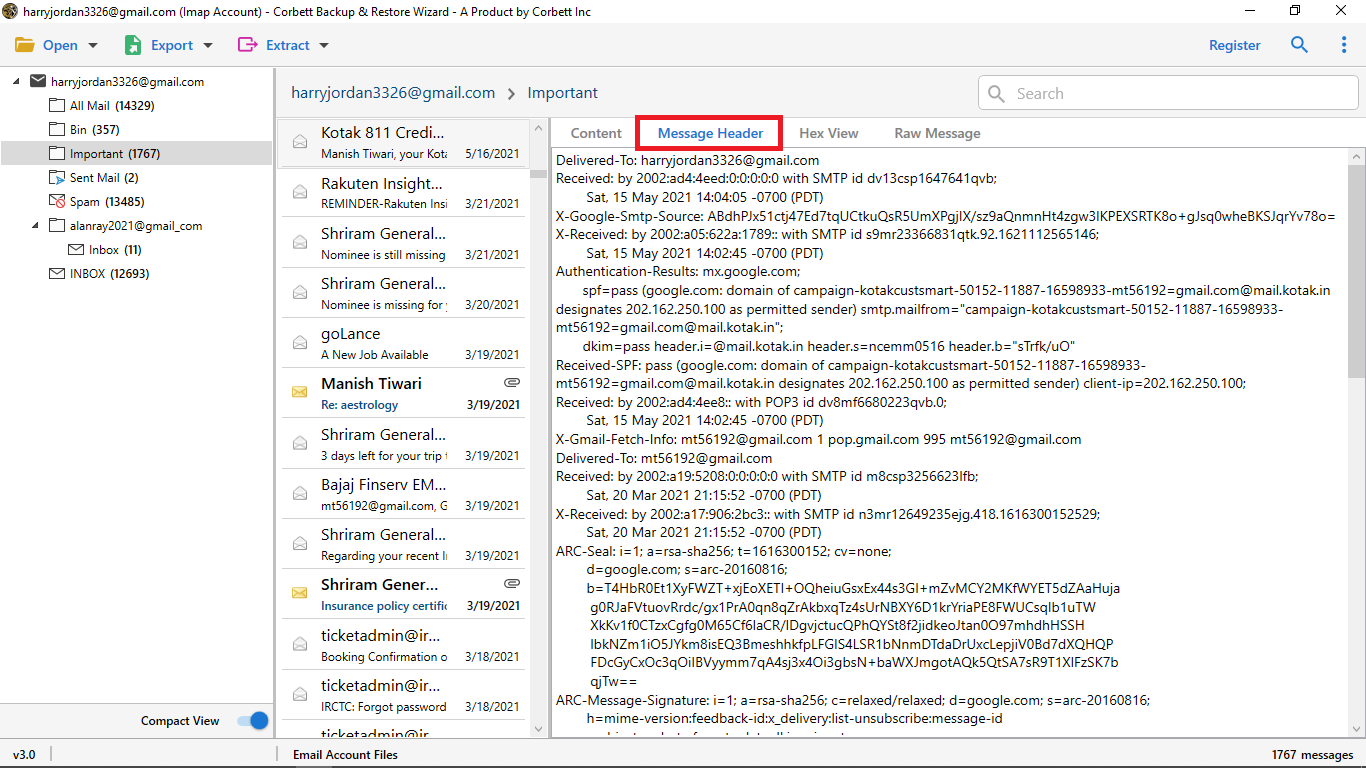
Message preview
Open any message in a reading pane with four expert views alongside. Before an old account closes, this is how the owner confirms the right letters, receipts and photos are being saved.
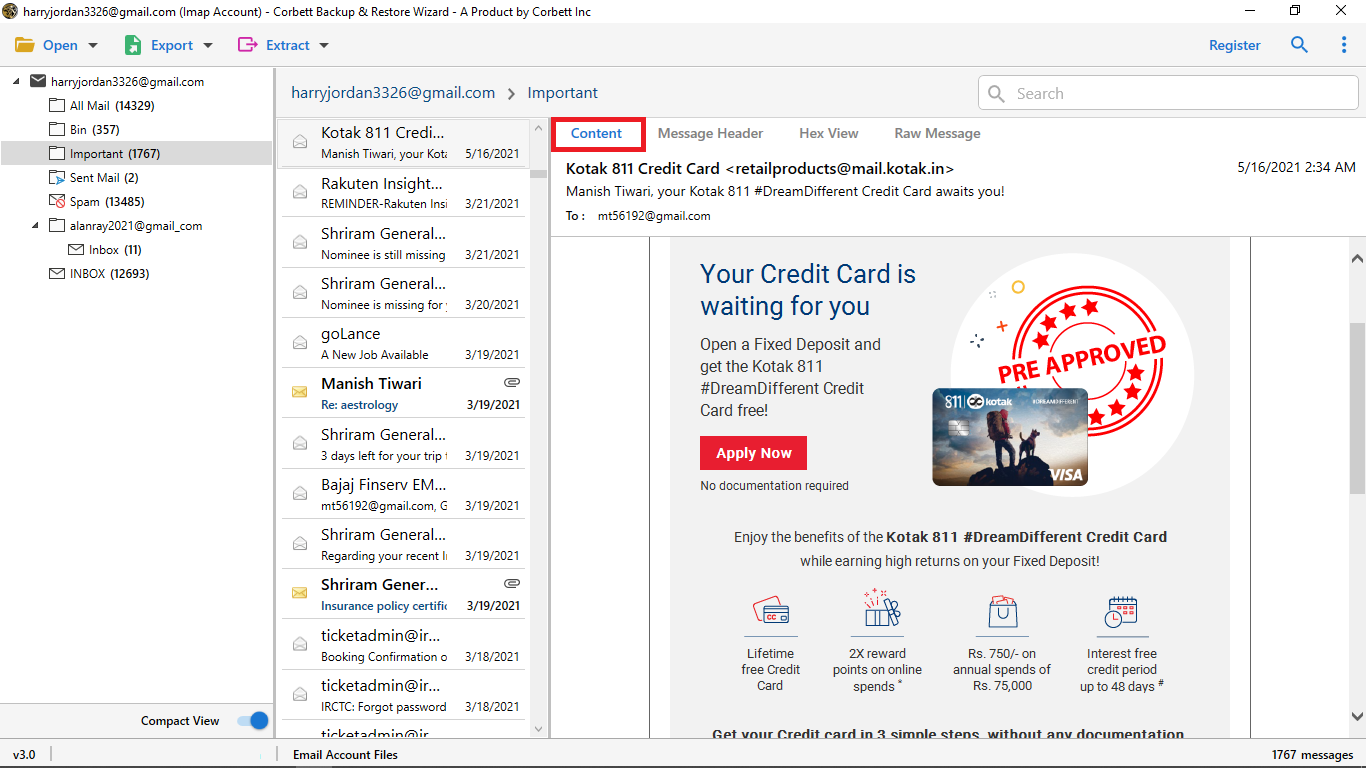
Selective backup
Set filters first and only matching Outlook.com mail is written. Years of shopping newsletters stay behind while bank letters, tickets and family mail come along.
Output options
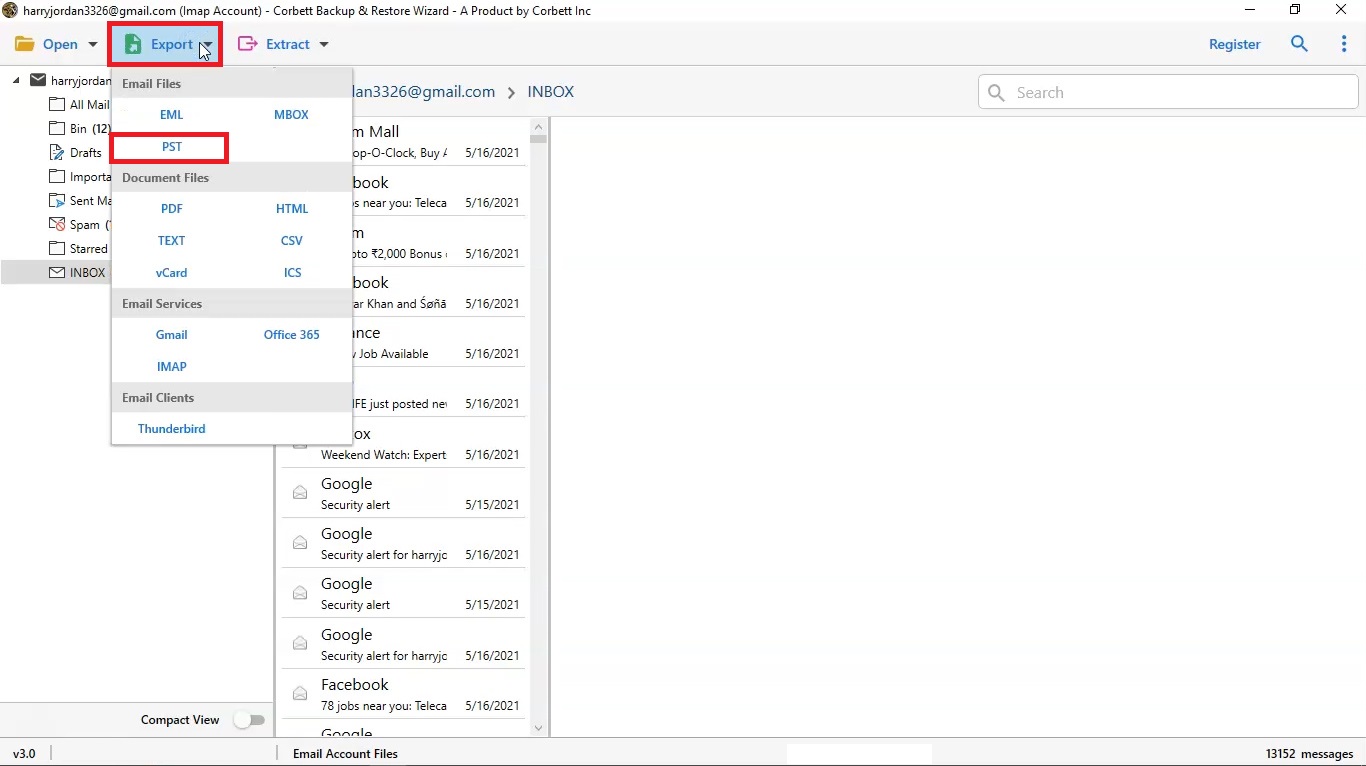
The target is the final step. Select a folder, a plugged-in drive or a shared network path. Mail can also go to another mailbox instead of a file. Files in a document format are named to a pattern, so a large export stays easy to search.
Before connecting
Microsoft changed the rules for personal accounts in September 2024, and most older guides still describe the way it used to work. Three things to know before adding an account.
Changed
Typed passwords are refused
Since September 2024 Microsoft rejects passwords entered into outside mail apps on personal accounts. Outlook.com Backup Tool therefore opens Microsoft's own login page and receives a sign-in token, never the password itself.
Not needed
App passwords were removed too
Many Hotmail tutorials still tell readers to create an app password. That option disappeared for personal accounts in the same 2024 update. Use the normal Microsoft login with Authenticator, a text code or a passkey instead.
Same login
One account covers all four names
Addresses at outlook.com, hotmail.com, live.com and msn.com all point to one Microsoft account per person. Log in with any alias and the same mailbox opens, so nothing has to be merged.
When the login window closes with an error, the account may be blocked or it may be a company address on a Microsoft 365 tenant. Work and school mail belongs with the Office 365 Backup Tool.
Free demo
Run a Free Outlook.com Backup Tool Test
Install the demo, log in on the Microsoft page and choose one folder and one format. No file is written until the run begins.
Download free demoWhy a copy
A free mailbox is convenient until the day it is not. These are the moments an Outlook.com backup tool copy earns its place.
Inactivity
An account left unused is deleted
Microsoft deletes a personal account after two years without activity, and the mail goes with it. A Hotmail address from school days that nobody checks is the one most at risk. A local copy outlives that deadline.
Storage
The mailbox has a ceiling
Free Outlook.com storage is 15 GB, and OneDrive photos count against it too. A full mailbox bounces incoming mail. Moving older years into a local file frees room without deleting a single message first.
Lockout
A copy outside the account
Lost passwords, a hacked account or a support chat that goes nowhere can cut access for weeks. Mail kept on a local disk opens regardless.
Microsoft runs the servers, but the data stays the account holder's job under its service terms. Saved files can be opened later, untouched, in the free email viewer software.
Before purchase
With classic Outlook installed, adding the account and exporting a PST costs nothing. It handles one account in one format. Here is where that free route ends.
| Task | Classic Outlook export | Outlook.com Backup Tool |
|---|---|---|
| Cost | Free with Outlook | $99 one time |
| Single account, single PST export | Built for exactly that | Can do this as well, though the price buys the extra rows |
| Which Outlook | Classic desktop Outlook only, the new app cannot | Outlook not needed at all |
| Output format | PST only | Eight output types, PDF and MBOX among them |
| Filter by date, sender or subject | The wizard has no filter step | Set the date, sender or size, then run |
| Several accounts | Add and export them one after another | Several accounts back up in a single pass |
| Full sync required first | Yes, the account must fully sync into Outlook first | No wait, it pulls straight from the server |
| Headers and raw source | Hidden inside a properties dialog | Every message viewable before the run |
Rows tinted green are the ones where classic Outlook wins.
For one account, PST only, with classic Outlook installed, the built-in export is enough and the purchase can wait. For other formats, several accounts or filtered copies, Outlook.com Backup Tool pays for itself. Existing files can still be turned into other formats by the email converter tool.
Specifications
Download details
System
Supported editions
Works on 32 and 64 bit Windows, 11 down to 7, plus Windows Server 2025 back to 2008.
No macOS or Linux build.
Corbett has built Windows email utilities since 2020. Questions go to the engineers who develop Outlook.com Backup Tool.
Working process
Prefer screenshots? The IMAP backup guide follows an Outlook.com backup screen by screen.

Common questions
Microsoft login, aliases, storage and the limits of the tool.
Yes. Hotmail, Live and MSN were merged into Outlook.com long ago and use one mailbox. Log in with any of your addresses and Outlook.com Backup Tool saves the full account. The old names have no separate mail to save.
Microsoft blocked passwords typed into outside mail apps for personal accounts in September 2024. The tool sends you to Microsoft's own login page, you sign in there and a token unlocks the mailbox. Your password never touches the software.
No. App passwords were removed for personal Microsoft accounts in the same 2024 update. Older Hotmail tutorials that mention them are out of date, and the Microsoft window takes care of two-step checks.
No. Your Authenticator prompt, text code or passkey shows up on Microsoft's page just like in a browser, so nothing needs switching off.
Yes. Log in once to every Outlook.com, Hotmail or Live account and queue them together. Every account gets its own output file, so an old Hotmail box and a current Outlook.com box end up as two tidy backups.
Yes, where the account holds them. People entries export as vCard and Calendar events as ICS beside the mail. OneDrive files and Microsoft To Do lists live in separate services and are not copied.
This tool covers free personal Microsoft accounts. Addresses on a company domain run on a Microsoft 365 tenant with their own admin rules, handled by the Office 365 Backup Tool page. The download is the same, only the sign-in target differs.
Use PST if the mail may return to Outlook or another account later. Use PDF for reading, printing or filing on a PC without Outlook. A second run in the other format costs nothing extra.
Not on its own. The tool only reads from the account, so Outlook.com stays untouched. After opening the local copy, delete old folders online to drop back under the 15 GB limit.
The full version has no cap on mailbox size. Large accounts take longer because Microsoft throttles downloads. A dropped connection resumes the run instead of restarting it.
No. Your PC talks to Microsoft directly and saves the files to a disk you choose. Corbett never receives a copy.
No. Outlook.com Backup Tool installs on Windows 7 to 11 and Windows Server 2008 to 2025 only.
Yes. It logs in, lists every folder and unlocks preview and filters. Output is limited to 10 emails per folder, which is plenty to check the file before paying.
Step by step
Guides for the jobs before and after an Outlook.com backup.
Related backups
Opening the result
All supported providers appear on the email backup software page. Moving an Outlook.com account to another provider is handled by the email migration tool. To browse a saved file with nothing exported, use the free email viewer software. Apple mailboxes use the iCloud backup tool, business Google mail the Google Workspace backup tool and cPanel mailboxes the Webmail backup tool. More walkthroughs: Transfer Outlook emails to another account, Save Outlook email as MSG file and Outlook contacts to iCloud.
User testimonials
Drawn from 683 reviews of Corbett's backup and restore wizard on personal Microsoft mail.
Collected across 683 reviews from download portals and customer email. Three of them appear below, unedited.
I had a Hotmail address from twenty years back that I barely use. Wanted a copy before it got deleted for being idle. Signed in through the Microsoft window, picked PST and it saved the lot without a hitch.
Every guide I read said generate an app password, and none of them worked any more. This one just opened the real Microsoft login, took my code and started reading the mailbox. Wish I had found it first.
Needed my Live.com and a newer Outlook.com address both saved before switching to a work setup. Added both, queued them and got two separate PST files. Simple and did exactly what it said.
Get started
Get the free demo, log in with a Microsoft account and test the output on real Outlook.com mail. One $99 payment covers a lifetime licence, with 30 days to request a refund.
Download free demo Purchase now
87.4 MB · Windows 11 to 7 and Windows Server 2025 to 2008 · 30 day money back